Introduction
In IT projects, email communication plays a crucial role in maintaining professionalism and clarity. Whether you are communicating with clients, managers, or team members, writing clear and professional emails is an essential skill.
In this guide by Jaipur Engineers, you will learn how to write professional emails in IT projects and improve your business communication skills.
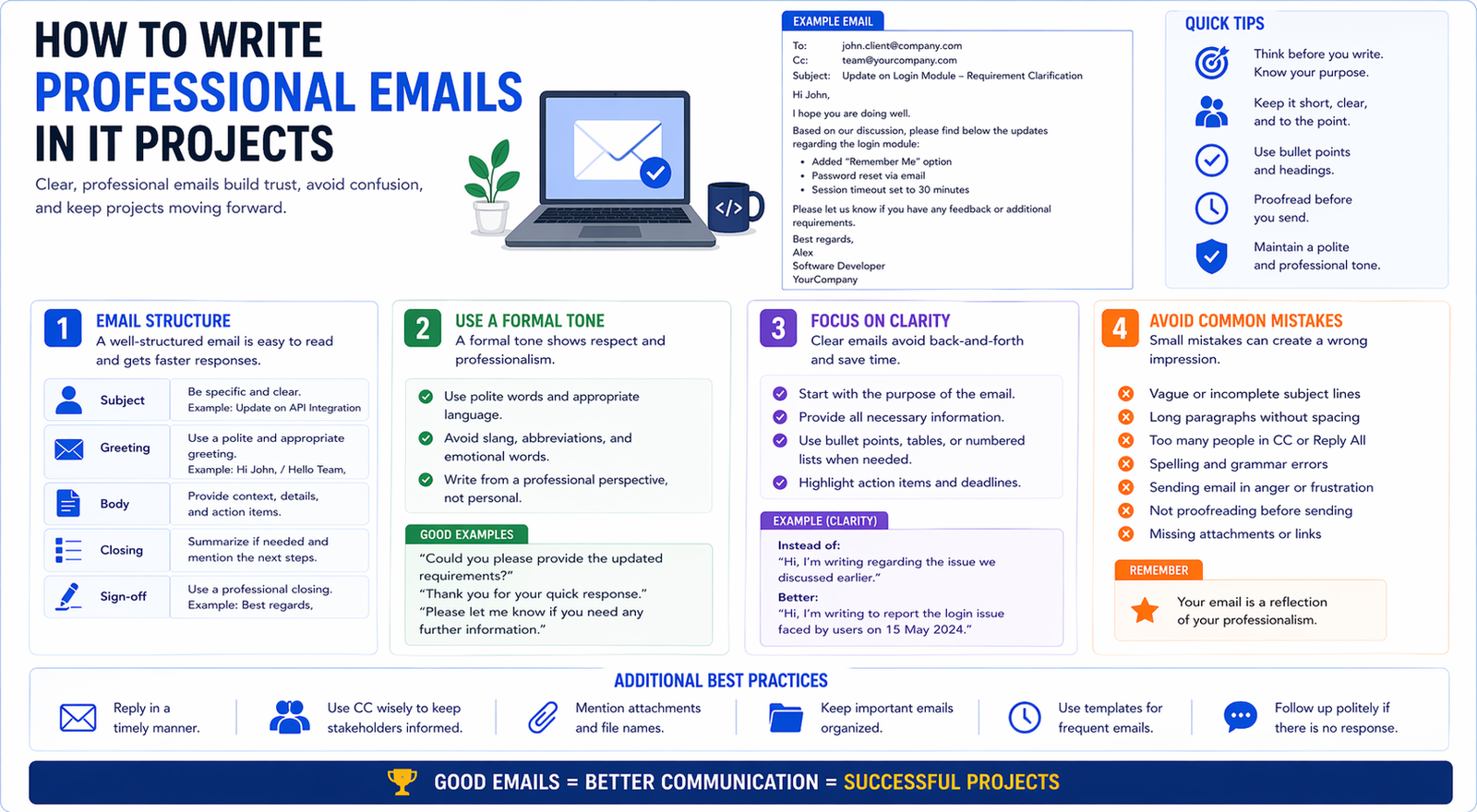
1. Email Structure
A well-structured email makes your message easy to understand.
Basic Structure:
- Subject line (clear and concise)
- Greeting (Dear/Hello)
- Introduction (purpose of email)
- Main content (details)
- Closing (thanks/regards)
Example:
Subject: Update on Project Module
A clear structure improves readability and professionalism.
2. Maintaining a Formal Tone
Professional emails should always use a formal tone.
What to Follow:
- Use polite language
- Avoid slang or casual words
- Be respectful and professional
Example:
Instead of “Hey,” use “Dear” or “Hello.”
A formal tone reflects professionalism.
3. Clarity in Communication
Your email should be clear and to the point.
Tips:
- Use simple language
- Avoid long paragraphs
- Highlight important points
Why It Matters:
Clear emails reduce confusion and improve response time.
4. Common Mistakes to Avoid
Avoiding common mistakes can improve your email quality.
Mistakes:
- Spelling and grammar errors
- Unclear subject lines
- Writing overly long emails
- Missing key information
Tip:
Always review your email before sending.
Conclusion
Professional email writing is a key skill in IT projects. A well-structured email with a formal tone and clear message helps you communicate effectively and build a strong professional image.
At Jaipur Engineers, we train students in both technical and communication skills required in real-world IT environments.
Start improving your email communication skills and become a complete professional 🚀