Technology evolves rapidly, and every year new programming languages, frameworks, and development tools emerge. Because of this, many beginners ask an important question: “Is Core Java still worth learning in 2026?”
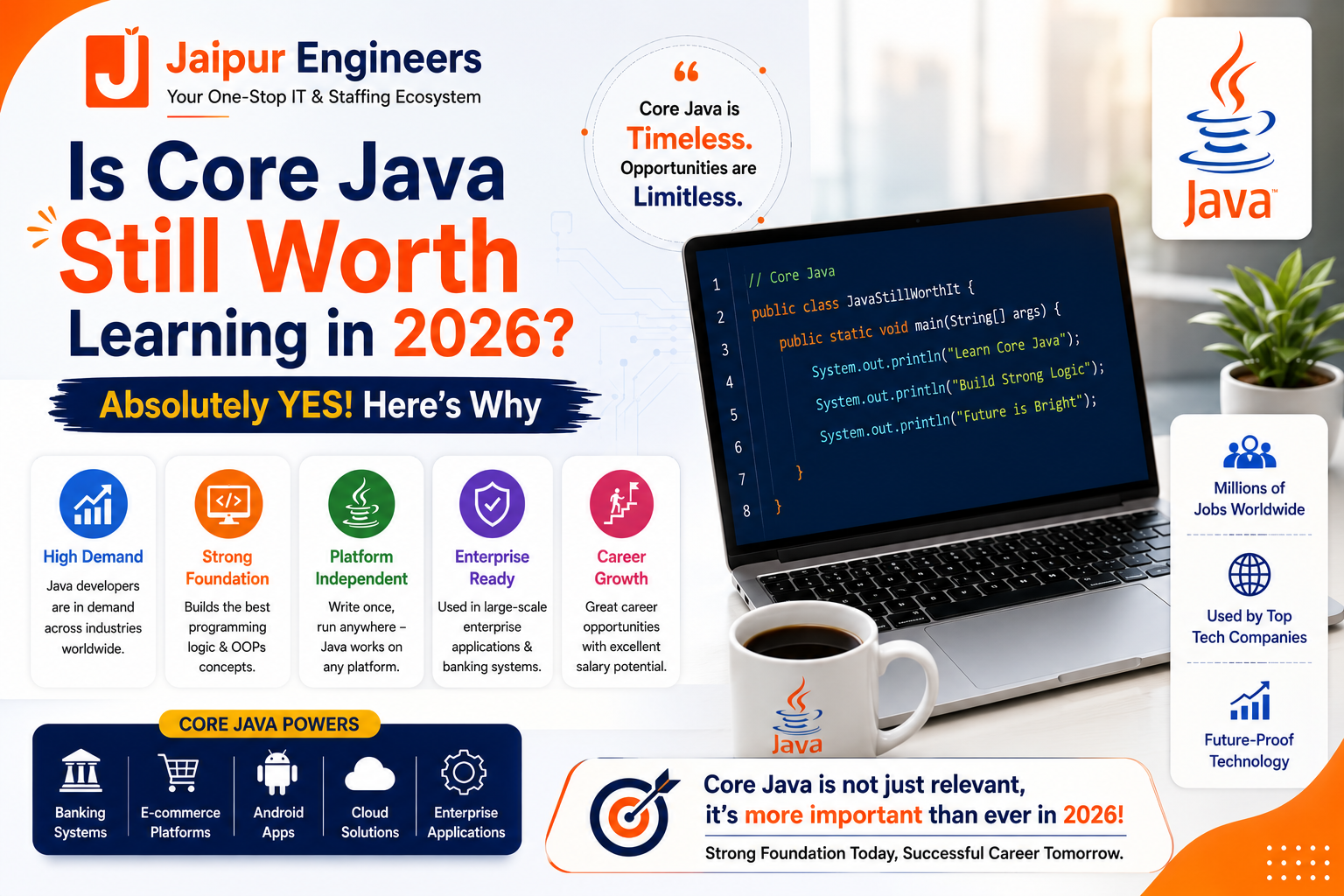
The answer is yes. Core Java continues to be one of the most valuable programming languages for students, fresh graduates, and professionals who want to build a career in software development. While languages like Python, JavaScript, and Go have gained popularity for specific use cases, Java remains the preferred choice for enterprise software, banking systems, healthcare applications, cloud platforms, Android development, and large-scale backend systems.
More importantly, Core Java is the foundation of the entire Java ecosystem. Technologies such as Spring Boot, Hibernate, Microservices, and Java Full Stack Development all depend on a strong understanding of Core Java.
In this guide, you’ll learn why Core Java is still relevant in 2026, its career opportunities, salary potential, industry demand, and why learning Java remains a smart investment for aspiring software developers.
Why Has Java Remained Popular for So Long?
Java was introduced in 1995, and even after three decades it continues to be one of the most trusted programming languages in the IT industry.
Its popularity comes from several key advantages:
- Platform Independence
- Strong Security
- High Performance
- Object-Oriented Programming
- Scalability
- Robust Memory Management
- Large Developer Community
- Enterprise Reliability
These features have made Java the preferred technology for mission-critical software applications worldwide.
Where is Java Used Today?
One reason Java remains valuable is its widespread adoption across industries.
Java is used in:
- Banking Software
- Healthcare Systems
- Insurance Platforms
- Government Applications
- Enterprise Resource Planning (ERP)
- E-commerce Platforms
- Logistics Software
- Android Applications
- Cloud Computing
- Financial Technology (FinTech)
Thousands of companies continue investing in Java-based applications, creating consistent demand for skilled developers.
Why Core Java Still Matters in 2026
Core Java introduces the essential programming concepts required for software development.
It teaches:
- Variables
- Data Types
- Operators
- Loops
- Methods
- Arrays
- Object-Oriented Programming
- Exception Handling
- Collections Framework
- Multithreading
- File Handling
- JDBC Basics
Without mastering these fundamentals, learning advanced Java technologies becomes much more difficult.
1. High Demand in the IT Industry
Java continues to rank among the most widely used programming languages for enterprise software development.
Companies hiring Java developers include:
- IT Service Companies
- Product-Based Companies
- Banks
- FinTech Startups
- Healthcare Organizations
- E-commerce Companies
- Government Organizations
- Cloud Technology Companies
This demand creates stable career opportunities for both freshers and experienced professionals.
2. Excellent Career Opportunities
Learning Core Java opens the door to multiple software development roles.
Popular career paths include:
- Java Developer
- Software Engineer
- Backend Developer
- Java Full Stack Developer
- Android Developer
- Application Developer
- QA Automation Engineer
- Technical Consultant
As you gain experience and learn advanced frameworks, your career opportunities expand significantly.
3. Strong Foundation for Advanced Technologies
Core Java is the starting point for learning:
- Advanced Java
- JDBC
- Servlets
- JSP
- Hibernate
- Spring Framework
- Spring Boot
- REST APIs
- Microservices
- Java Full Stack Development
Every professional Java developer begins with Core Java before moving to these technologies.
4. Competitive Salary Packages
Java developers continue to earn attractive salaries in India and worldwide.
| Experience | Average Salary |
|---|---|
| Fresher | ₹3.5–6 LPA |
| 2–4 Years | ₹6–12 LPA |
| 5–8 Years | ₹12–22 LPA |
| Senior Developer | ₹22–40+ LPA |
Developers with Spring Boot, Microservices, Cloud, and DevOps skills often receive even higher salary packages.
5. Ideal for Beginners
Core Java remains one of the best programming languages for learning programming fundamentals.
Students learn:
- Logical Thinking
- Problem Solving
- OOP Concepts
- Clean Coding
- Software Design Principles
These skills are transferable to many other programming languages.
6. Huge Community and Learning Resources
Java has one of the largest programming communities in the world.
Benefits include:
- Free Tutorials
- Documentation
- Open-Source Libraries
- Community Forums
- Coding Examples
- Learning Platforms
This makes learning Java easier for beginners.
7. Future-Proof Career
Although new programming languages continue to emerge, Java remains deeply embedded in enterprise software.
Millions of existing Java applications require ongoing maintenance, upgrades, and new feature development.
This ensures long-term career stability for Java developers.
8. Gateway to Full Stack Development
After learning Core Java, students can become Full Stack Developers by learning:
- Spring Boot
- SQL
- REST APIs
- HTML
- CSS
- JavaScript
- React.js
This combination significantly increases job opportunities and salary potential.
Future Scope of Java in 2026 and Beyond
Java continues to be one of the most future-proof programming languages. Thousands of enterprise applications, banking platforms, government systems, and cloud-based services are built using Java, creating a constant demand for skilled developers.
Java is expected to remain a preferred technology for:
- Enterprise Software Development
- Cloud-Based Applications
- Banking & Financial Systems
- Healthcare Platforms
- E-commerce Applications
- Artificial Intelligence Integrations
- Internet of Things (IoT)
- Microservices Architecture
- Android Development
- Backend APIs
As businesses modernize their applications, Java developers with modern framework knowledge will continue to be highly valued.
Core Java vs Other Programming Languages
Choosing a programming language depends on your career goals. Here’s how Core Java compares with some popular options.
| Language | Best For | Career Scope |
|---|---|---|
| Java | Enterprise Software, Backend Development | ⭐⭐⭐⭐⭐ |
| Python | AI, Data Science, Automation | ⭐⭐⭐⭐⭐ |
| JavaScript | Frontend & Full Stack Web Development | ⭐⭐⭐⭐⭐ |
| C# | Microsoft Technologies | ⭐⭐⭐⭐ |
| Go | Cloud Infrastructure | ⭐⭐⭐⭐ |
| PHP | Web Development | ⭐⭐⭐ |
Java stands out for enterprise applications, stability, scalability, and long-term career opportunities.
Java Learning Roadmap
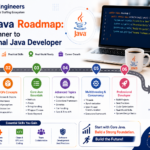
If you’re serious about becoming a Java Developer, follow this roadmap:
Core Java
      ↓
Advanced Java
      ↓
JDBC & SQL
      ↓
Servlets & JSP
      ↓
Hibernate
      ↓
Spring Framework
      ↓
Spring Boot
      ↓
REST APIs
      ↓
Git & GitHub
      ↓
HTML + CSS + JavaScript
      ↓
React.js (Optional)
      ↓
Build Live Projects
      ↓
Placement Preparation
      ↓
Java Developer
Career Opportunities After Learning Core Java
After mastering Core Java and progressing through the Java ecosystem, you can apply for roles such as:
- Java Developer
- Junior Software Engineer
- Backend Developer
- Full Stack Java Developer
- Spring Boot Developer
- REST API Developer
- Android Developer
- QA Automation Engineer
- Software Consultant
- Technical Support Engineer
With experience, you can advance to roles like Technical Lead, Solution Architect, or Engineering Manager.
Why Choose Jaipur Engineers?
At Jaipur Engineers, we help students move beyond theory by focusing on practical programming skills and industry readiness.
What You Get
- Industry-Experienced Trainers
- Hands-On Coding Sessions
- Real-Time Java Projects
- Updated Java Curriculum
- Resume Building
- Mock Technical Interviews
- GitHub Portfolio Guidance
- Placement Assistance
- Flexible Weekday & Weekend Batches
- Course Completion Certificate
- Lifetime Learning Support
Our training is designed to help beginners become confident Java Developers with the skills employers expect.
Internal Links
Use these relevant internal links naturally within the blog:
- Home: https://jaipurengineers.com/
- Java Programming Course: https://jaipurengineers.com/java-programming-course-jaipur/
- Java Full Stack Course: https://jaipurengineers.com/java-full-stack-course-jaipur/
- Placement Assistance: https://jaipurengineers.com/placement-assistance/
- Student Placements: https://jaipurengineers.com/student-placements/
- Contact Us: https://jaipurengineers.com/contact-us/
Conclusion
The answer to “Is Core Java Still Worth Learning in 2026?” is a definite yes. Core Java remains one of the strongest foundations for a career in software development, especially for those interested in backend systems, enterprise applications, and full stack development.
By learning Core Java, you gain programming fundamentals, object-oriented programming skills, and the confidence to build real-world applications. As you progress to technologies like Spring Boot, Hibernate, REST APIs, and Microservices, your career opportunities and earning potential continue to grow.
If you’re looking for a practical, industry-focused learning experience, Jaipur Engineers provides expert-led training, hands-on projects, interview preparation, and placement assistance to help you achieve your software development goals.
Call to Action
🚀 Start Your Java Journey Today!
Join the Core Java Course at Jaipur Engineers and build a strong foundation in programming through live coding sessions, real-world projects, certification, and placement assistance.
👉 Explore the Course: https://jaipurengineers.com/java-programming-course-jaipur/
📞 Contact Us: https://jaipurengineers.com/contact-us/
Frequently Asked Questions (FAQs)
1. Is Core Java still relevant in 2026?
Yes. Core Java remains one of the most widely used programming languages for enterprise software, backend development, and cloud applications.
2. Can I get a job after learning Core Java?
Core Java provides a strong foundation. Learning Advanced Java, Spring Boot, SQL, and building projects significantly improves job opportunities.
3. Is Java better than Python?
It depends on your career goals. Java is preferred for enterprise applications and backend development, while Python is widely used in AI, machine learning, and automation.
4. What is the average salary of a Java Developer?
Freshers generally earn ₹3.5–6 LPA, while experienced developers can earn ₹20 LPA or more.
5. What should I learn after Core Java?
Advanced Java, JDBC, Servlets, JSP, Hibernate, Spring Boot, REST APIs, SQL, Git, and Java Full Stack Development.
6. Is Java difficult to learn?
No. Core Java is beginner-friendly and teaches structured programming concepts that are easy to understand with regular practice.
7. Which industries use Java?
Banking, healthcare, e-commerce, fintech, telecommunications, education, cloud computing, and government sectors.
8. Does Jaipur Engineers provide placement assistance?
Yes. Students receive resume building, mock interviews, career guidance, and placement support.
9. How long does it take to learn Core Java?
Most students complete Core Java in 2–3 months, depending on the training schedule and practice time.
10. Why should I choose Jaipur Engineers?
Jaipur Engineers offers practical training, live coding sessions, industry projects, certification, expert mentorship, and placement assistance.