Introduction
Working with clients is a key part of software development, but not all client interactions are smooth. Developers often face challenges like unclear requirements, frequent changes, and unrealistic expectations.
In this guide by Jaipur Engineers, you will learn how to handle difficult clients in IT projects and manage project communication issues professionally.
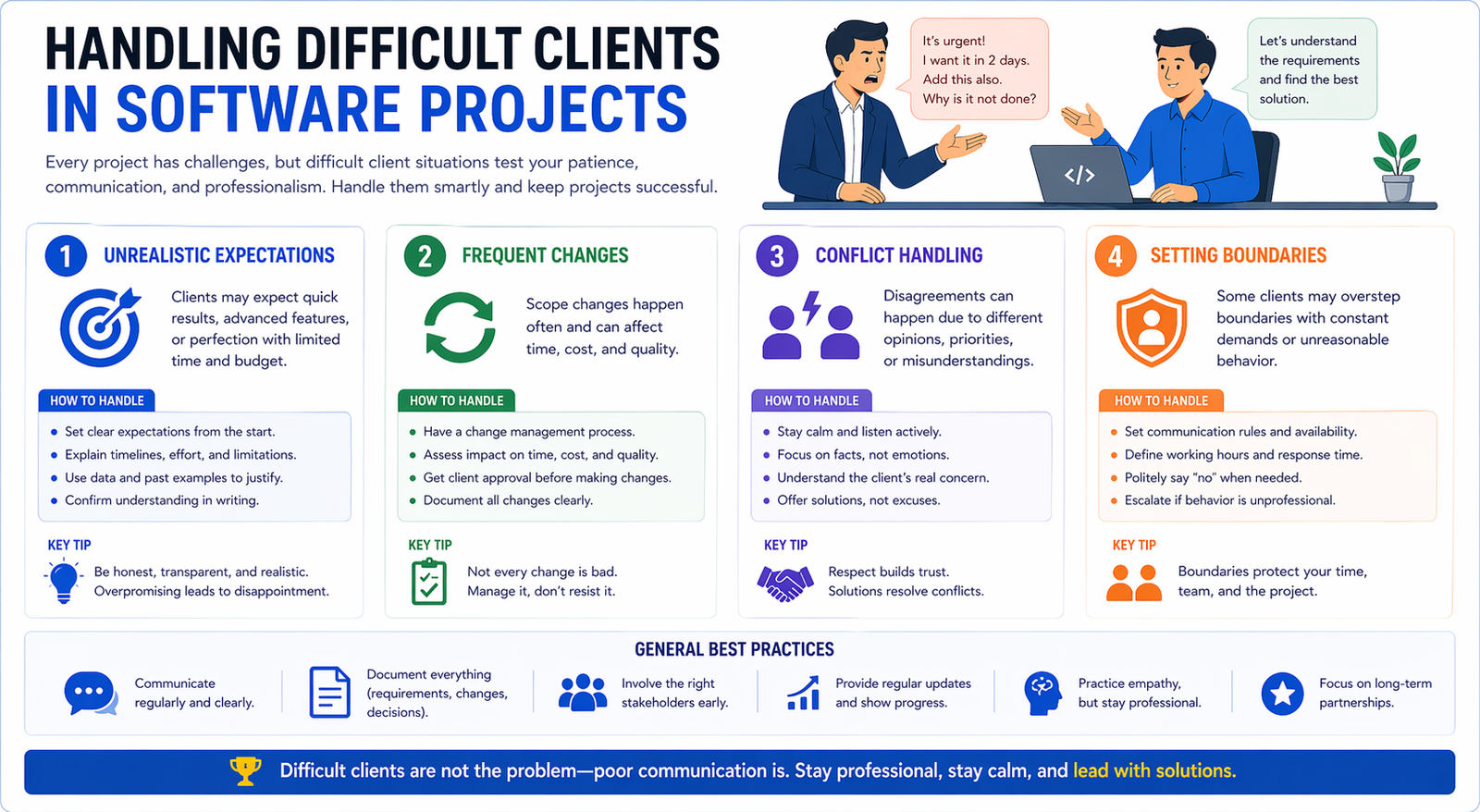
1. Managing Unrealistic Expectations
Some clients expect faster delivery, lower cost, and more features than realistically possible.
How to Handle It:
- Set clear expectations from the beginning
- Explain timelines and limitations
- Break down deliverables into phases
Tip:
Always communicate what is possible and what is not.
Managing expectations helps avoid future conflicts.
2. Handling Frequent Changes
Frequent requirement changes can delay projects and increase complexity.
What You Should Do:
- Document all requirements clearly
- Use change request processes
- Discuss impact on timeline and cost
Key Point:
Every change should be evaluated before implementation.
3. Conflict Handling
Conflicts may arise due to misunderstandings or disagreements.
Best Practices:
- Stay calm and professional
- Listen to the client’s concerns
- Focus on solutions, not arguments
Goal:
Resolve issues without damaging relationships.
4. Setting Boundaries
Setting boundaries is important to maintain work quality and mental balance.
How to Do It:
- Define scope clearly
- Avoid overpromising
- Communicate working hours and limits
Benefit:
Boundaries ensure a healthy and productive work environment.
Conclusion
Handling difficult clients is a skill every developer must learn. By managing expectations, controlling changes, handling conflicts professionally, and setting clear boundaries, you can maintain successful client relationships.
At Jaipur Engineers, we train students to handle real-world client interactions and communication challenges effectively.
Start building strong client-handling skills and grow as a professional developer 🚀