Introduction
Industry-ready developer training is essential for IT students who want to succeed in real-world careers. While theoretical knowledge builds a foundation, practical IT training and real industry workflows prepare students for actual job environments. Understanding how real projects are executed helps students bridge the gap between learning and working.
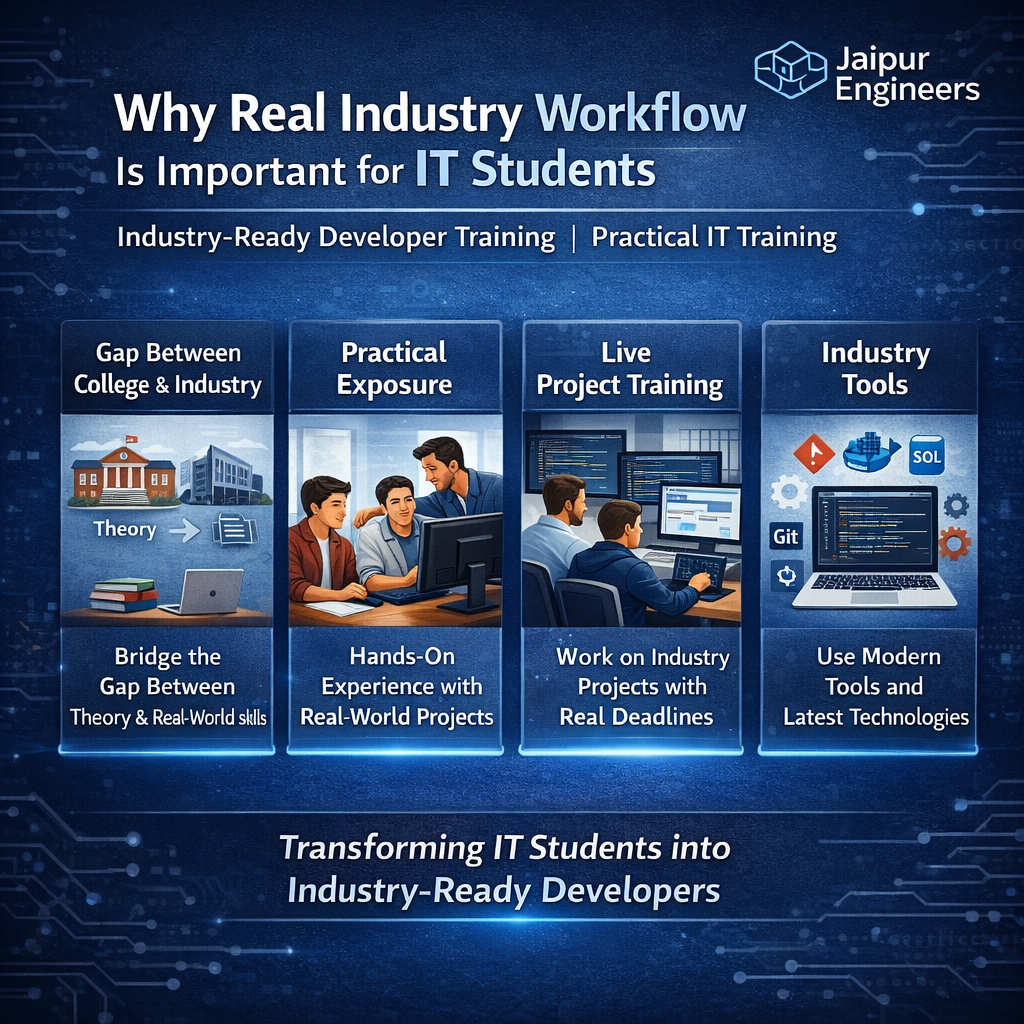
Gap Between College & Industry
There is often a significant gap between what students learn in college and what companies expect.
Key Issues:
- Focus on theory rather than practical skills
- Limited exposure to real-world projects
- Lack of understanding of development workflows
- Minimal teamwork experience
This gap makes it difficult for students to transition into professional roles.
Importance of Practical Exposure
Practical IT training helps students gain hands-on experience and confidence.
Key Benefits:
- Better understanding of real-world scenarios
- Improved problem-solving skills
- Confidence in handling projects
- Stronger technical foundation
Practical exposure ensures that students are not just learners but job-ready professionals.
Live Project Training
Working on live projects is one of the most effective ways to learn industry workflows.
Key Benefits:
- Experience working on real applications
- Understanding client requirements
- Exposure to deadlines and deliverables
- Improved teamwork and communication
Live projects simulate real job environments and prepare students for industry challenges.
Industry Tools
Using industry tools is crucial for modern software development.
Key Benefits:
- Familiarity with real development tools
- Understanding version control systems
- Exposure to testing and deployment tools
- Better workflow management
Learning tools used by professionals gives students a competitive advantage.
Why Industry Workflow Matters
1. Makes Students Job-Ready
Students understand how real projects are built and managed.
2. Improves Employability
Employers prefer candidates with practical experience.
3. Builds Confidence
Hands-on learning reduces fear of real-world challenges.
4. Enhances Collaboration Skills
Students learn how to work in teams effectively.
Best Practices for IT Students
- Focus on practical learning along with theory
- Work on real-world projects
- Learn industry tools and workflows
- Collaborate with peers on projects
- Continuously upgrade skills
Conclusion
Real industry workflow is essential for IT students to become successful professionals. From practical IT training to live project experience and industry tools, every aspect helps students build skills that companies value.
By focusing on industry-ready developer training, students can bridge the gap between college and career and achieve long-term success.