Introduction
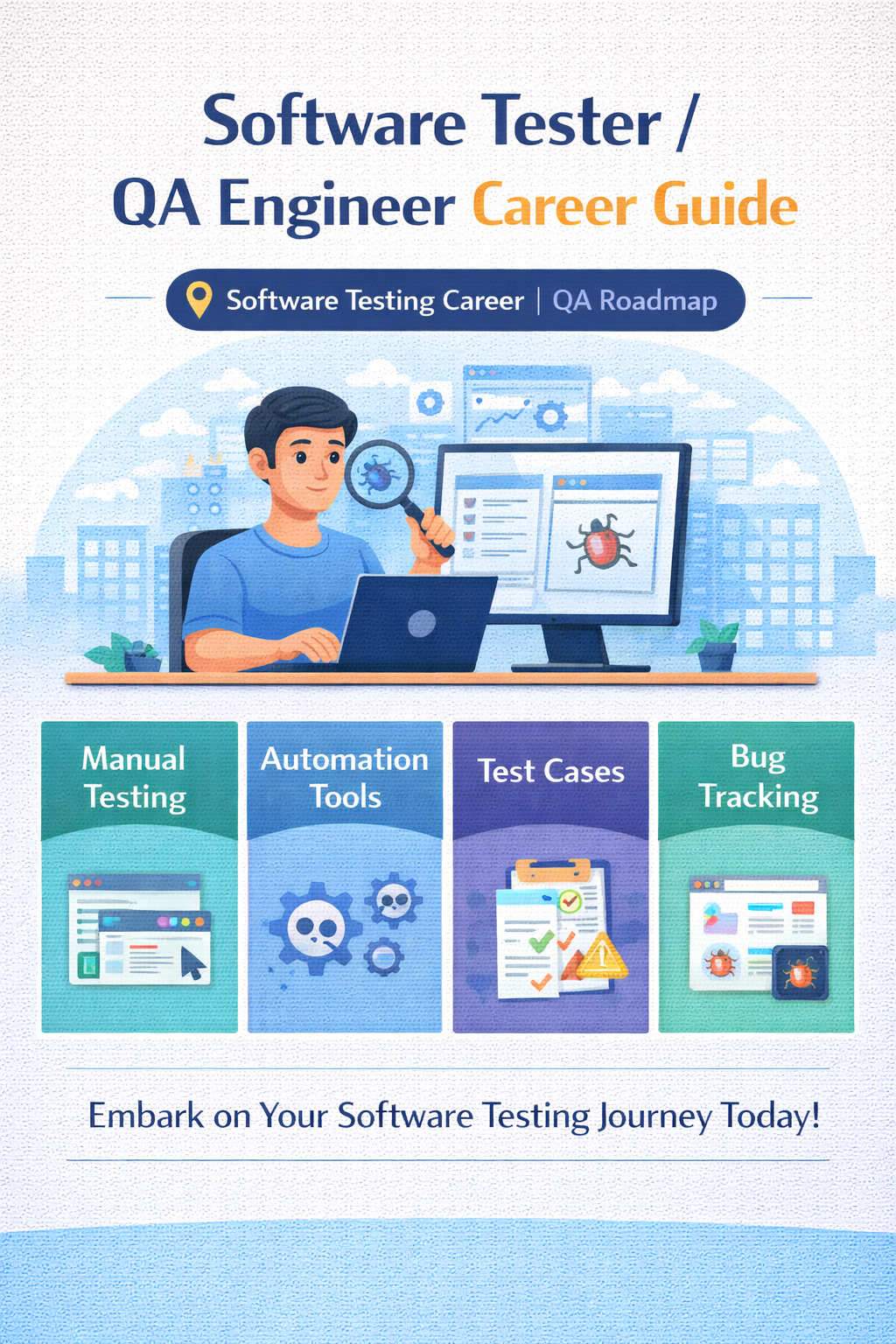
A career in software testing is a great option for students who want to ensure quality and reliability in applications. By learning the right skills and following a structured approach, beginners can build a strong foundation and grow in this field.
Step 1: Manual Testing
Manual testing is the starting point for every tester.
What to Learn:
- Basics of software testing
- Types of testing (functional, regression)
- Understanding requirements
Key Benefits:
- Strong testing fundamentals
- Understanding application behavior
- Identifying basic issues
Step 2: Automation Tools
Automation helps in testing applications efficiently.
What to Learn:
- Automation basics
- Popular tools (Selenium, etc.)
- Writing test scripts
Key Benefits:
- Faster testing process
- Reduces manual effort
- Improves accuracy
Step 3: Test Cases
Test cases are essential for structured testing.
What to Learn:
- Writing test cases
- Test scenarios and conditions
- Documentation practices
Key Benefits:
- Organized testing approach
- Better coverage of application
- Clear understanding of requirements
Step 4: Bug Tracking
Bug tracking helps manage issues effectively.
What to Learn:
- Reporting bugs
- Using tracking tools
- Managing bug lifecycle
Key Benefits:
- Improved communication with team
- Faster issue resolution
- Better product quality
Why This Career Path Works
1. High Demand
Testing is essential in every software project.
2. Practical Learning
Focuses on real-world scenarios.
3. Career Growth
Opportunities in manual and automation testing.
4. Industry Relevance
Used in all software development processes.
Best Tips for Students
- Practice regularly
- Work on real projects
- Learn tools step by step
- Focus on fundamentals
- Stay consistent
Conclusion
Software testing offers excellent career opportunities for students who focus on quality and detail. By learning manual testing, automation tools, test cases, and bug tracking, learners can become job-ready and succeed in this field.