Introduction
In the software industry, project managers play a critical role in ensuring that projects are completed successfully, on time, and within scope. They act as the bridge between clients, developers, and stakeholders.
In this guide by Jaipur Engineers, you will learn about the project manager role in IT and how software project management works in real companies.
1. Task Assignment
One of the primary responsibilities of a project manager is assigning tasks to team members.
How It Works:
- Break down the project into smaller tasks
- Assign tasks based on skills and expertise
- Track progress regularly
Tools Used:
- Jira
- Trello
- ClickUp
Proper task assignment ensures efficient workflow and productivity.
2. Deadline Management
Meeting deadlines is crucial in software development.
Responsibilities:
- Set realistic timelines
- Monitor progress
- Ensure timely delivery
Challenges:
- Handling delays
- Managing workload
A good project manager balances speed and quality.
3. Team Coordination
Project managers ensure smooth collaboration among team members.
Key Activities:
- Conduct meetings
- Resolve conflicts
- Keep everyone aligned with project goals
Importance:
- Improves communication
- Enhances productivity
Strong coordination leads to better results.
4. Risk Management
Every project has risks, and managing them is a key responsibility.
Types of Risks:
- Technical issues
- Resource limitations
- Deadline risks
What Project Managers Do:
- Identify risks early
- Plan solutions
- Minimize impact
Effective risk management ensures project stability.
Conclusion
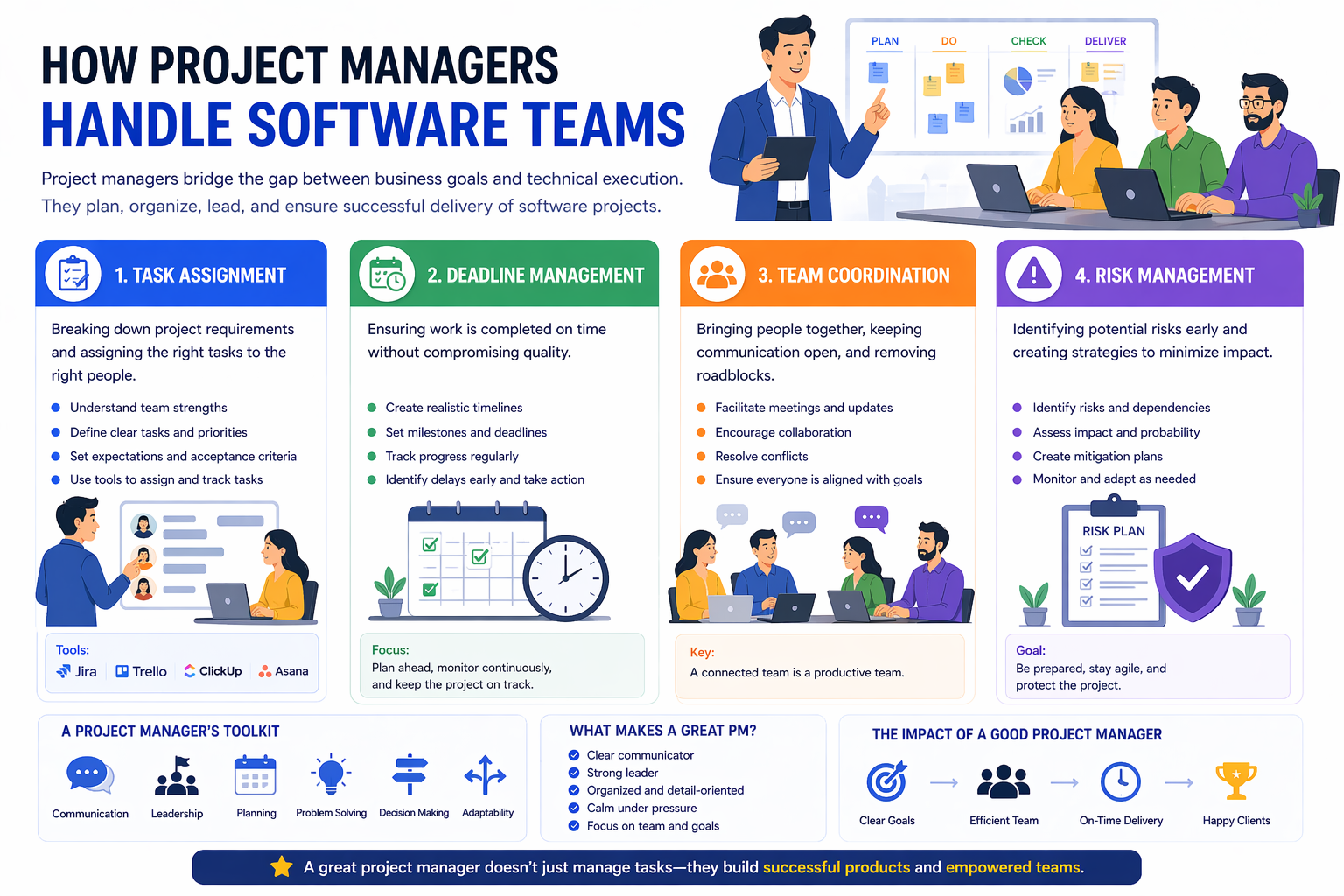
Project managers play a vital role in handling software teams and ensuring successful project delivery. Their responsibilities include task assignment, deadline management, team coordination, and risk management.
At Jaipur Engineers, we help students understand real-world software project management practices to prepare them for industry roles.
Start learning how software teams are managed and become industry-ready 🚀