Introduction
Getting the first client is one of the biggest challenges for beginner developers. With the right strategy and consistent effort, students can land their first project and start their freelancing journey with confidence.
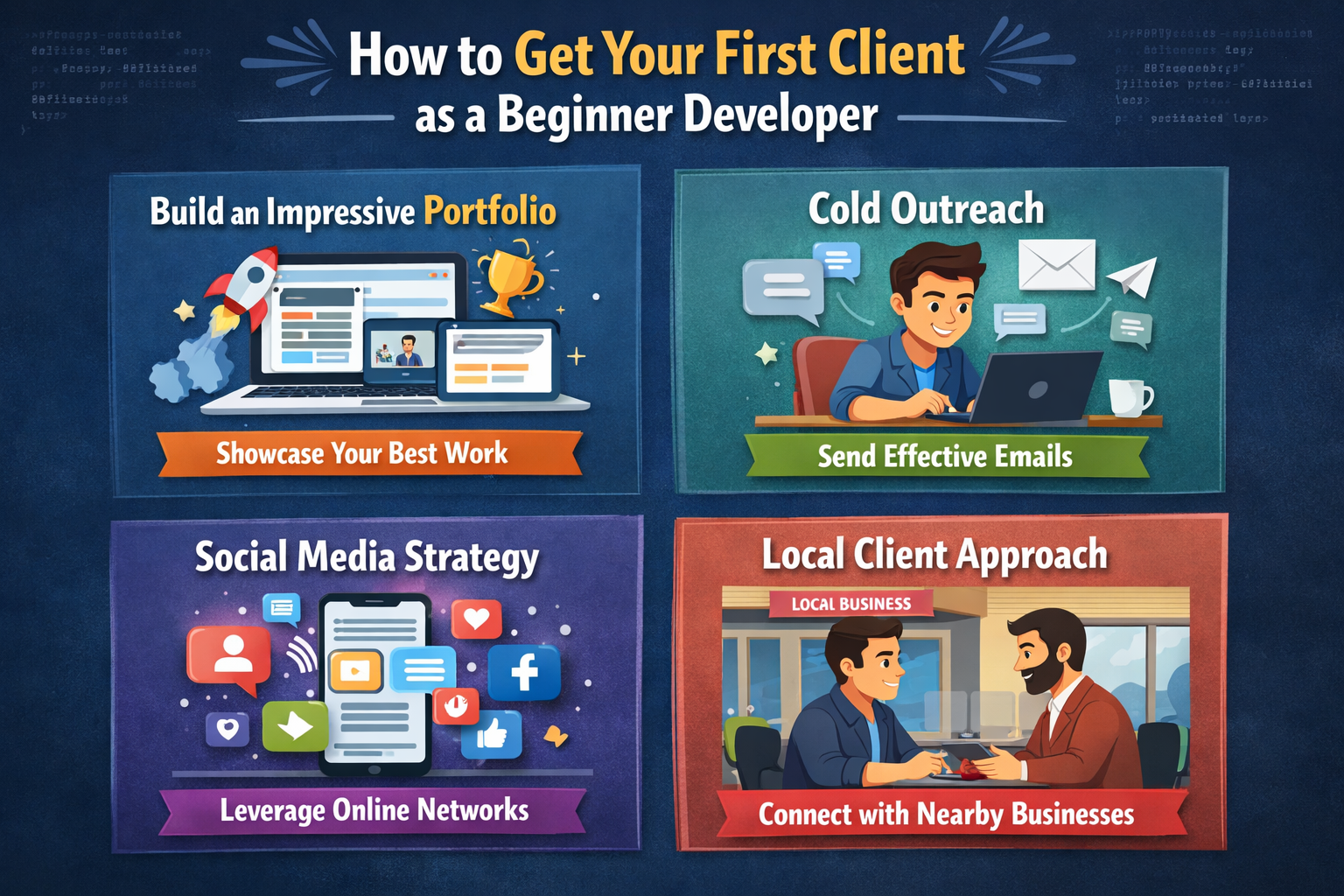
Portfolio Importance
A strong portfolio is the foundation of getting clients.
What to Include:
- Real or demo projects
- Clean and simple designs
- Clear explanation of work
Key Benefits:
- Builds trust with clients
- Shows your actual skills
- Improves chances of getting hired
Cold Outreach
Reaching out directly to potential clients is a powerful method.
What to Do:
- Contact small businesses
- Offer simple solutions
- Keep communication clear and professional
Key Benefits:
- Direct client connection
- Faster opportunities
- Builds confidence
Social Media Strategy
Social media can help you showcase your work and attract clients.
What to Do:
- Share your projects regularly
- Post learning progress
- Engage with audience
Key Benefits:
- Builds personal brand
- Attracts potential clients
- Creates visibility
Local Client Approach
Starting locally can be easier for beginners.
What to Do:
- Approach local businesses
- Offer affordable services initially
- Build relationships
Key Benefits:
- Easier communication
- Quick trust building
- Real-world experience
Why This Approach Works
1. Builds Confidence
Students gain real-world experience.
2. Improves Skills
Working with clients improves practical knowledge.
3. Creates Opportunities
First project leads to more work.
4. Portfolio Growth
Each project strengthens your profile.
Best Tips for Students
- Start small and stay consistent
- Focus on quality work
- Communicate clearly
- Keep improving your portfolio
- Be patient and persistent
Conclusion
Getting your first client may take time, but with the right approach and consistency, students can achieve it. By focusing on portfolio, outreach, and real-world interaction, beginners can successfully start their development journey.