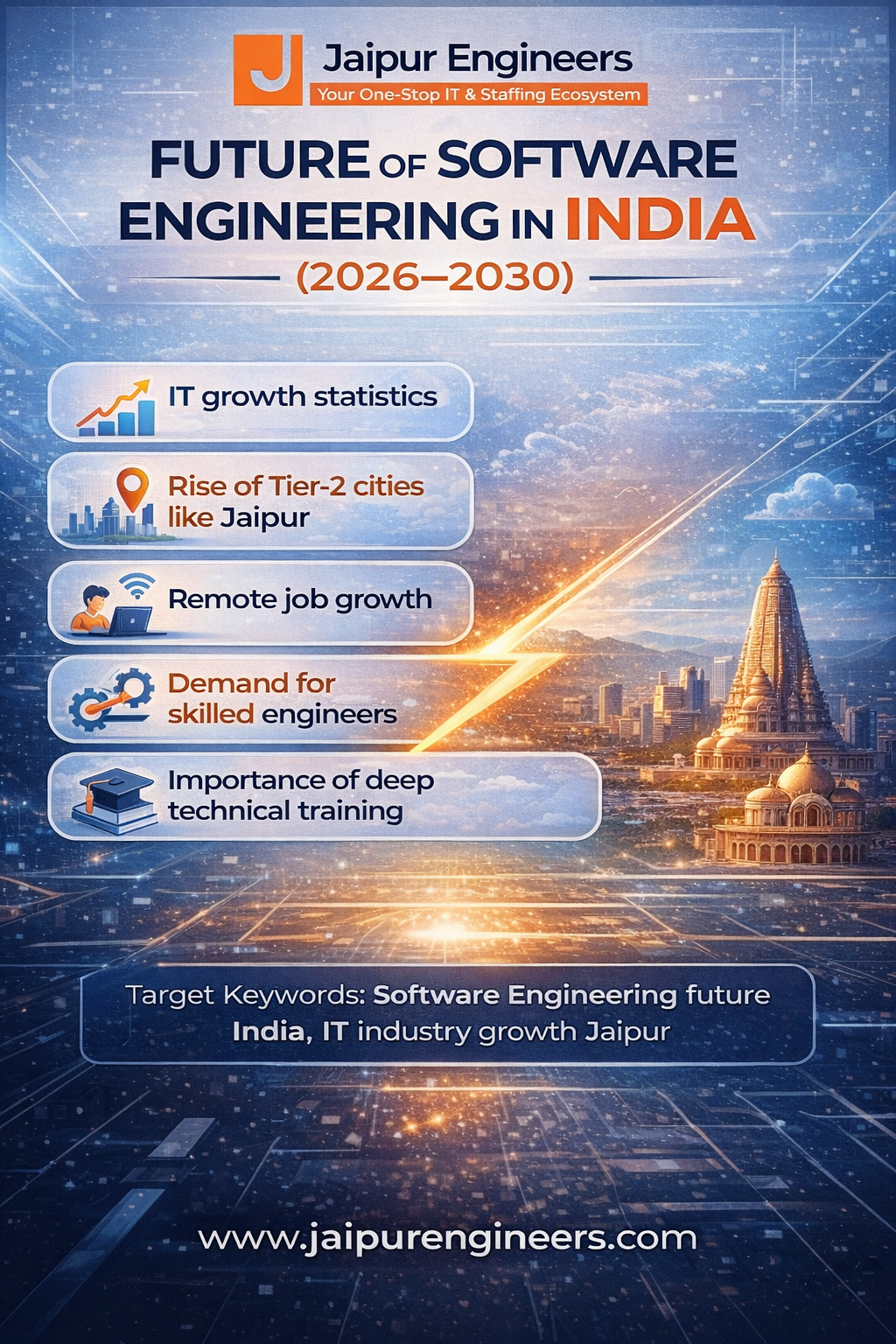
Introduction
India’s technology ecosystem is entering a powerful growth phase. Between 2026 and 2030, the demand for skilled software engineers is expected to increase significantly due to digital transformation, AI adoption, startup expansion, and global outsourcing trends.
This blog explores the Software Engineering future India landscape, the IT industry growth in Jaipur and other Tier-2 cities, remote job expansion, and why deep technical training will define career success in the coming years.
IT Growth Statistics: India’s Expanding Tech Economy
India has become one of the largest IT service exporters in the world. The IT sector contributes significantly to GDP and continues to attract global investment.
Key Growth Drivers (2026–2030):
- Expansion of AI and Machine Learning solutions
- Growth in SaaS startups
- Increased cloud adoption
- Cybersecurity demand
- Government digital initiatives
With global companies outsourcing development to India, software engineering roles are expected to grow across domains such as fintech, healthtech, edtech, e-commerce, and enterprise automation.
The future of software engineering in India is not slowing down—it is accelerating.
Rise of Tier-2 Cities Like Jaipur
One of the biggest shifts in the Indian IT ecosystem is the rapid growth of Tier-2 cities.
Cities like Jaipur are witnessing strong IT industry growth due to:
- Lower operational costs
- Skilled local talent
- Startup-friendly ecosystem
- Improved infrastructure
- Remote work culture adoption
Jaipur is emerging as a technology and startup hub in Rajasthan. Local IT companies, training institutes, and software development firms are creating new job opportunities for freshers and experienced professionals.
This decentralization of IT growth is reducing migration pressure on metro cities and creating regional tech ecosystems.
Remote Job Growth and Global Opportunities
Remote work is no longer temporary. It is becoming the default model for many IT companies.
Between 2026 and 2030:
- More Indian engineers will work for global companies remotely
- Freelancing and contract-based development will increase
- Cross-border startup collaborations will grow
Developers from cities like Jaipur can now work for companies in the US, Europe, and the Middle East without relocating.
However, remote opportunities demand high skill levels, strong communication abilities, and deep technical expertise.
Demand for Skilled Engineers
The market is not just looking for coders. It is looking for problem solvers.
High-demand roles include:
- Full Stack Developers
- AI/ML Engineers
- Cloud Engineers
- DevOps Specialists
- Cybersecurity Experts
- Backend Architects
Companies prefer engineers who understand:
- Data structures and algorithms
- System design
- API architecture
- Database optimization
- Scalable backend development
Surface-level knowledge is no longer enough. Deep technical capability will separate average developers from high-paying professionals.
Importance of Deep Technical Training
As competition increases, the importance of structured and industry-focused technical training becomes critical.
Why Deep Technical Training Matters:
- Strong fundamentals build long-term career stability.
- Advanced concepts help in cracking product-based company interviews.
- Real-world project experience builds confidence.
- System design knowledge prepares engineers for leadership roles.
- Continuous upskilling ensures relevance in a fast-changing industry.
Students and professionals must focus on mastering programming languages, backend systems, cloud technologies, and modern development practices.
Quick courses are not enough. Consistency and depth matter.
Conclusion
The Software Engineering future India (2026–2030) looks extremely promising. IT industry growth in Jaipur and other Tier-2 cities is creating new opportunities. Remote work is expanding global access. Demand for skilled engineers is rising.
But the real advantage will belong to those who invest in deep technical training and strong core programming skills.
The next five years will not just reward participation.
They will reward expertise.
If you are serious about building a long-term career in software engineering, now is the time to strengthen your foundation and prepare for the future.