Introduction
DevOps is a powerful approach that combines development and operations to improve the speed and quality of software delivery. With the right learning path and practical experience, students can build strong skills and grow in this field.
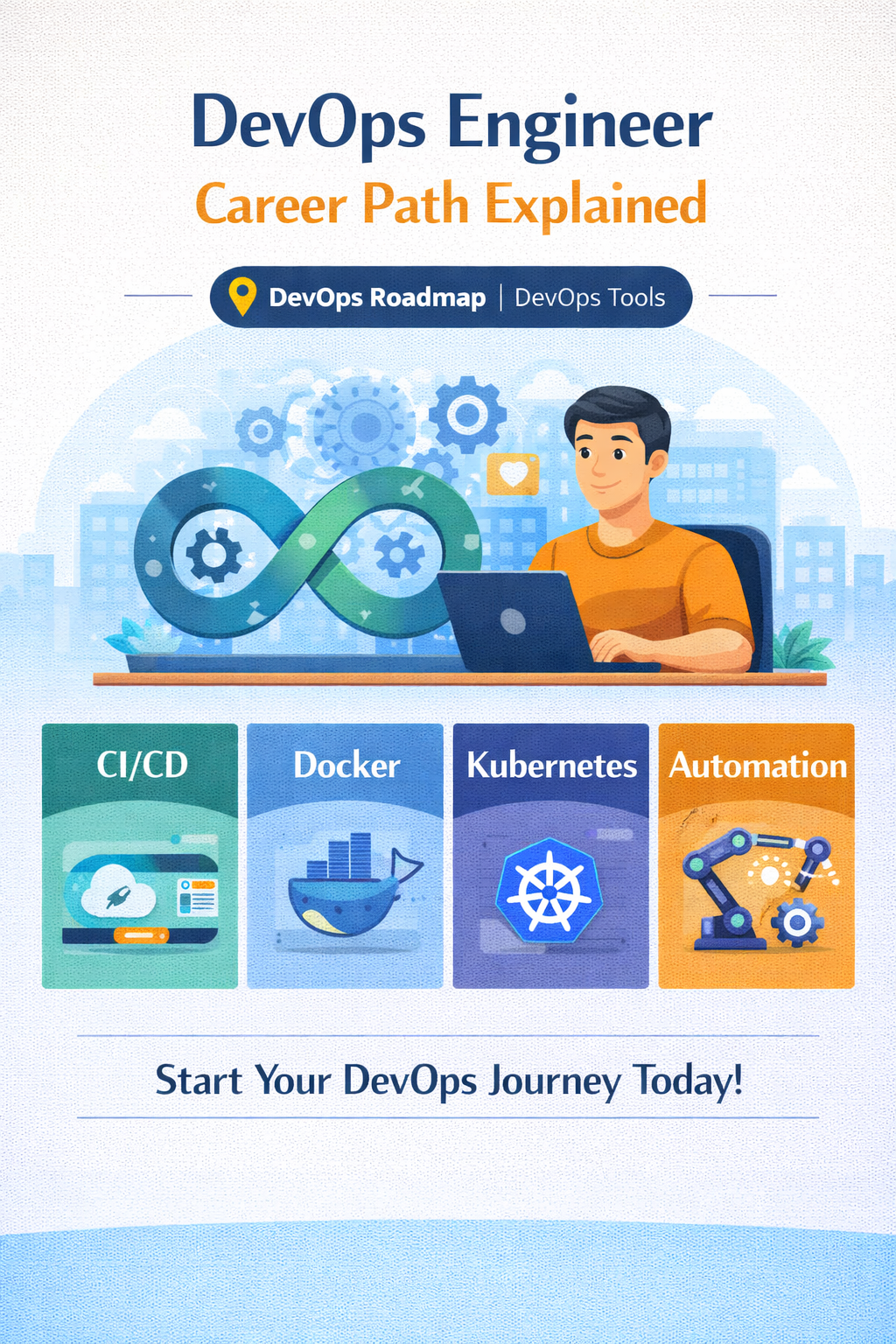
Step 1: CI/CD
Continuous Integration and Continuous Deployment are core concepts.
What to Learn:
- Automating build and test processes
- Continuous deployment pipelines
- Version control basics
Key Benefits:
- Faster development cycles
- Reduced errors
- Efficient release process
Step 2: Docker
Docker helps in containerizing applications.
What to Learn:
- Creating containers
- Managing images
- Running applications in isolated environments
Key Benefits:
- Consistent environments
- Easy deployment
- Better resource utilization
Step 3: Kubernetes
Kubernetes is used for managing containers at scale.
What to Learn:
- Container orchestration
- Scaling applications
- Managing clusters
Key Benefits:
- High availability
- Scalability
- Efficient resource management
Step 4: Automation
Automation is the backbone of DevOps practices.
What to Learn:
- Scripting basics
- Infrastructure automation
- Monitoring and logging
Key Benefits:
- Reduced manual work
- Faster processes
- Improved efficiency
Why This Career Path Works
1. High Demand
Companies need faster and reliable deployment systems.
2. Practical Learning
Focuses on real-world workflows.
3. Career Growth
Offers strong long-term opportunities.
4. Industry Relevance
Used in modern software development processes.
Best Tips for Students
- Learn step by step
- Practice with real tools
- Build small projects
- Stay consistent
- Keep upgrading skills
Conclusion
DevOps offers excellent opportunities for students who focus on practical learning and real-world tools. By understanding automation, containers, and deployment workflows, learners can build a strong career in this growing field.