Introduction
Many students and beginners want to learn programming but feel confused about where to start. Programming may look complex in the beginning, but with the right roadmap and practice strategy, anyone can learn it.
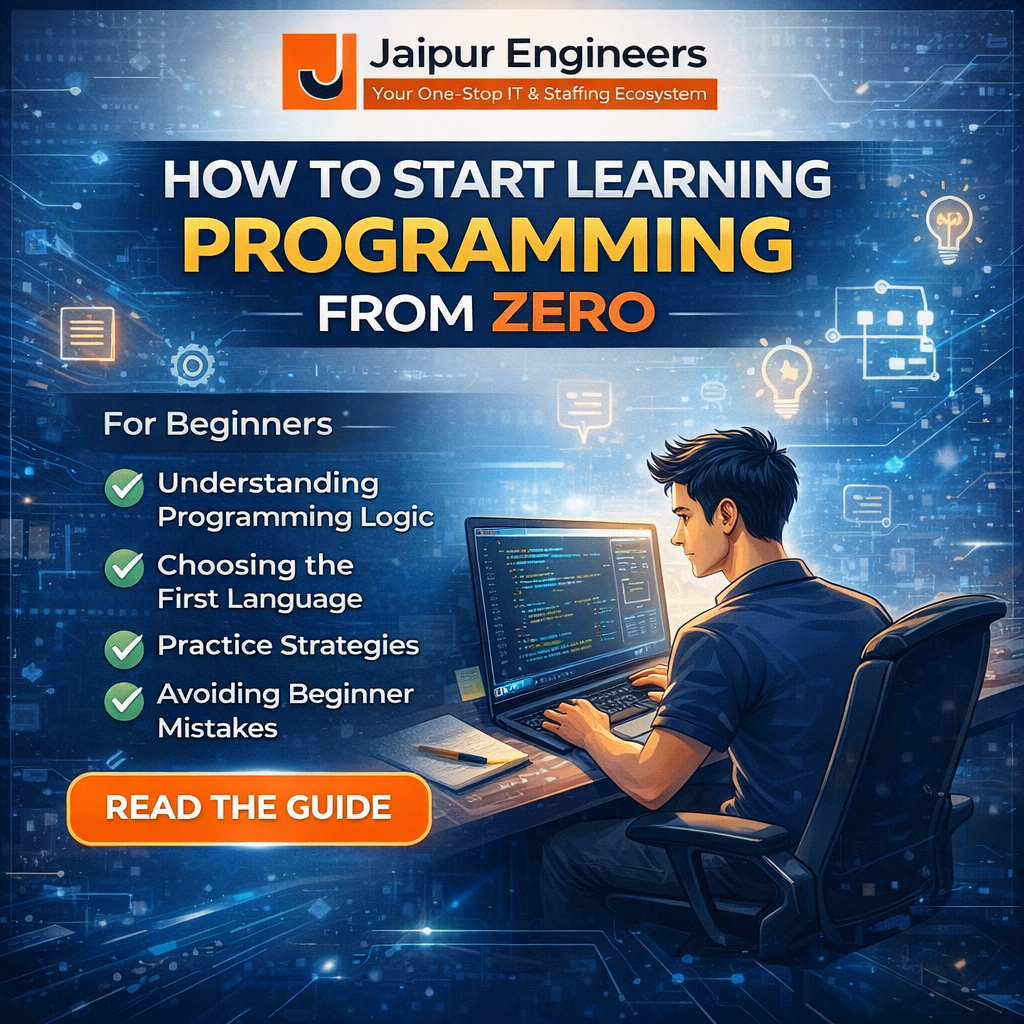
In this guide, we explain a simple programming roadmap for beginners. You will learn how to understand programming logic, choose your first programming language, practice effectively, avoid common beginner mistakes, and build small projects.
Understanding Programming Logic
Before writing code, it is important to understand programming logic. Programming is essentially giving clear instructions to a computer to solve a problem.
Basic logic concepts include:
- Variables and data types
- Conditions (if / else statements)
- Loops
- Functions
- Input and output
Instead of memorizing syntax, beginners should focus on understanding how problems are solved step by step.
For example, if you want to build a program that calculates the average of numbers, you must first understand the logical steps involved before writing the code.
Strong logical thinking is the foundation of good programming.
Choosing Your First Programming Language
One of the biggest questions beginners ask is which language they should learn first.
Popular beginner-friendly languages include:
Python – Simple syntax and widely used in AI, data science, and automation.
JavaScript – Essential for web development and building interactive websites.
Java – Common in enterprise software and Android applications.
C++ – Strong for learning programming fundamentals and performance-oriented systems.
The best approach is to choose one language and focus on it until you understand the fundamentals.
Switching languages too early can slow down the learning process.
Practice Strategies for Beginners
Programming is a skill that improves with practice. Reading theory alone is not enough.
Effective practice methods include:
- Solving small coding problems daily
- Writing simple programs
- Studying example code
- Rewriting programs in your own way
- Debugging errors
Beginners should try to code every day, even if it is only for one hour.
Consistency matters more than long study sessions.
Avoiding Common Beginner Mistakes
Many beginners struggle because they follow ineffective learning habits.
Common mistakes include:
- Trying to learn too many languages at once
- Watching tutorials without practicing
- Copying code without understanding
- Giving up after encountering errors
Errors are a natural part of programming. Debugging and fixing issues is how developers learn.
The key is patience and persistence.
Building Small Projects
Projects help convert theoretical knowledge into practical experience.
Good beginner projects include:
- Calculator program
- To-do list application
- Simple website
- Number guessing game
- Basic student management system
Projects help beginners understand how different programming concepts work together.
They also help students build a portfolio of work that can be shown to employers.
Conclusion
Learning programming from zero is completely possible with the right approach. Beginners should focus on understanding programming logic, choosing one language, practicing consistently, and building small projects.
Following a clear programming roadmap helps students stay motivated and avoid confusion.
Programming is a skill that grows step by step through practice and problem solving.