Java has remained one of the most trusted programming languages in the software industry for decades. From banking applications and healthcare systems to cloud platforms and enterprise software, Java powers millions of business applications worldwide. As organizations continue to modernize their technology infrastructure, the demand for skilled Java developers remains consistently high.
For students and fresh graduates, one of the most common questions is: “What salary can I expect after learning Core Java?” The answer depends on several factors, including your technical skills, project experience, certifications, interview performance, and knowledge of advanced Java technologies.
Learning Core Java is the first step toward building a successful career in software development. Once you master the fundamentals, you can progress to technologies like Advanced Java, JDBC, Hibernate, Spring Boot, REST APIs, and Java Full Stack Development, significantly increasing your earning potential.
In this guide, we’ll explore Java Developer salaries in India, career opportunities after Core Java, factors affecting salary, skills employers expect, and the roadmap to becoming a successful Java Developer in 2026.
Why Choose Java as a Career?
Java is widely used across industries because of its security, scalability, reliability, and cross-platform compatibility.
Major industries using Java include:
- Banking & Finance
- Healthcare
- E-Commerce
- Telecommunications
- Government
- Manufacturing
- Logistics
- Education
- Cloud Computing
- Enterprise Software
Since these industries rely on Java for mission-critical applications, skilled developers continue to enjoy strong job demand.
Is Core Java Enough to Get a Job?
Core Java provides the foundation required to begin your software development journey. It teaches programming fundamentals, Object-Oriented Programming (OOP), exception handling, collections, multithreading, file handling, and database connectivity concepts.
While some entry-level opportunities are available for candidates with strong Core Java knowledge, employers generally prefer applicants who also understand:
- SQL & MySQL
- JDBC
- Advanced Java
- Git & GitHub
- Spring Framework
- Spring Boot
- REST APIs
- Basic HTML, CSS & JavaScript
Adding these skills significantly improves employability and salary prospects.
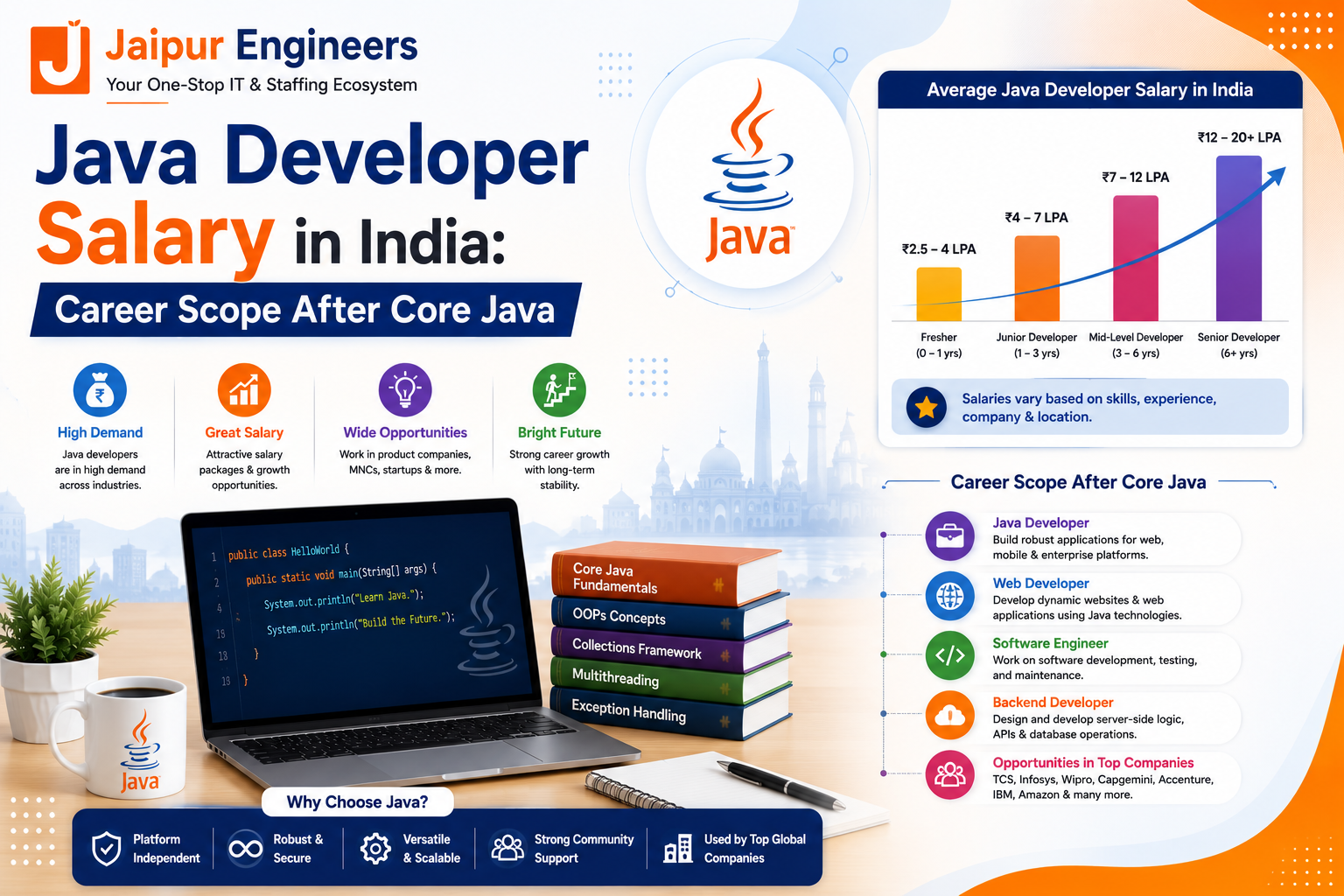
Average Java Developer Salary in India (2026)
Java developers are among the highest-paid software professionals in India due to the language’s widespread adoption across enterprise applications.
| Experience Level | Average Salary |
|---|---|
| Java Intern | ₹15,000–30,000/month |
| Fresher (0–1 Year) | ₹3.5–6 LPA |
| 2–4 Years | ₹6–12 LPA |
| 5–8 Years | ₹12–22 LPA |
| Senior Java Developer | ₹22–40+ LPA |
| Technical Architect | ₹40–60+ LPA |
Actual salaries vary based on skills, company, location, certifications, and project experience.
Factors That Affect Java Developer Salary
Several factors influence how much a Java Developer can earn.
1. Technical Skills
Developers with expertise in:
- Spring Boot
- Hibernate
- REST APIs
- Microservices
- SQL
- Git
- Docker
- Cloud Platforms
generally receive higher salary packages.
2. Practical Project Experience
Recruiters prefer candidates who have developed real-world applications rather than only theoretical knowledge.
Recommended projects include:
- Banking Management System
- Student Management System
- E-Commerce Backend
- Employee Management System
- Inventory Management System
Projects strengthen your resume and improve interview performance.
3. Company Type
Salary also depends on where you work.
Examples include:
- Startups
- IT Service Companies
- Product-Based Companies
- Multinational Corporations (MNCs)
- FinTech Companies
Product companies generally offer higher compensation compared to service-based organizations.
4. Location
Major technology hubs often offer better salary packages.
Popular cities include:
- Bengaluru
- Hyderabad
- Pune
- Chennai
- Noida
- Gurugram
- Mumbai
- Jaipur
Remote opportunities have also increased, allowing skilled Java developers to work for companies across India and abroad.
Career Scope After Learning Core Java
After mastering Core Java, you can pursue various software development roles.
Popular career options include:
- Java Developer
- Junior Software Engineer
- Backend Developer
- Application Developer
- Android Developer
- QA Automation Engineer
- Software Consultant
- Java Full Stack Developer
As your experience grows, you can move into senior technical and leadership roles.
Skills You Should Learn After Core Java
To accelerate your career growth, continue learning:
- Advanced Java
- JDBC
- Servlets
- JSP
- Hibernate
- Spring Framework
- Spring Boot
- REST APIs
- Git & GitHub
- SQL
- HTML
- CSS
- JavaScript
These technologies prepare you for enterprise software development and significantly improve your earning potential.
Java Developer Career Roadmap
After learning Core Java, follow a structured roadmap to become a skilled Java Developer.
Core Java
      ↓
Advanced Java
      ↓
JDBC & SQL
      ↓
Servlets & JSP
      ↓
Hibernate
      ↓
Spring Framework
      ↓
Spring Boot
      ↓
REST APIs
      ↓
Git & GitHub
      ↓
HTML + CSS + JavaScript
      ↓
React.js (Optional)
      ↓
Build Live Projects
      ↓
Internship
      ↓
Java Developer
Following this roadmap helps you become industry-ready and improves your chances of securing high-paying software development jobs.
Highest Paying Java Jobs in India
Java developers can specialize in different roles depending on their interests and expertise.
| Job Role | Average Salary |
|---|---|
| Junior Java Developer | ₹3.5–6 LPA |
| Backend Developer | ₹5–10 LPA |
| Full Stack Java Developer | ₹6–15 LPA |
| Spring Boot Developer | ₹8–18 LPA |
| Microservices Developer | ₹10–22 LPA |
| Senior Java Developer | ₹20–40+ LPA |
| Technical Lead | ₹25–45 LPA |
| Solution Architect | ₹40–60+ LPA |
Skills That Increase Your Salary
Employers value developers who go beyond Core Java. Learning the following technologies can significantly improve your salary and career growth:
- Advanced Java
- Spring Boot
- Hibernate
- REST APIs
- Microservices
- SQL & MySQL
- Git & GitHub
- Docker
- Maven
- Cloud Platforms (AWS/Azure)
- Basic React.js or Angular
- Problem Solving & DSA
The more practical experience you have with these technologies, the stronger your profile becomes.
Future Scope of Java
Despite the rise of newer programming languages, Java remains one of the most reliable and widely adopted technologies in enterprise software development.
Java continues to be used in:
- Enterprise Software
- Banking Applications
- Cloud Computing
- Healthcare Systems
- FinTech Solutions
- E-commerce Platforms
- Government Projects
- Insurance Software
- ERP Systems
- Android Development
With millions of Java applications already in use and continuous demand for backend development, Java remains a stable and future-proof career choice.
How to Increase Your Salary as a Java Developer
If you want to earn a higher salary, focus on continuous learning and practical experience.
Tips to grow faster:
- Build 8–10 real-world projects.
- Contribute to GitHub regularly.
- Learn Spring Boot and REST APIs.
- Improve SQL and database skills.
- Practice Data Structures and Algorithms.
- Earn Java certifications.
- Participate in coding contests.
- Develop communication and teamwork skills.
- Prepare thoroughly for technical interviews.
- Keep learning new Java ecosystem tools.
Why Choose Jaipur Engineers?
At Jaipur Engineers, we prepare students for real software development careers—not just classroom learning.
Why Students Prefer Jaipur Engineers
- Industry-Experienced Trainers
- Practical Coding Sessions
- Live Industry Projects
- Updated Java Curriculum
- Interview Preparation
- Resume Building
- GitHub Portfolio Guidance
- Mock Technical Interviews
- Placement Assistance
- Flexible Batch Timings
- Certification
- Lifetime Learning Support
Our focus is on helping students become confident, job-ready Java developers.
Internal Links
Use these relevant internal links throughout the article:
- Home: https://jaipurengineers.com/
- Java Programming Course: https://jaipurengineers.com/java-programming-course-jaipur/
- Java Full Stack Course: https://jaipurengineers.com/java-full-stack-course-jaipur/
- Placement Assistance: https://jaipurengineers.com/placement-assistance/
- Student Placements: https://jaipurengineers.com/student-placements/
- Contact Us: https://jaipurengineers.com/contact-us/
Conclusion
Java continues to be one of the strongest career choices for aspiring software developers in 2026. While Core Java provides the essential programming foundation, expanding your skills with Advanced Java, Spring Boot, Hibernate, REST APIs, SQL, and practical projects can significantly increase your earning potential.
Whether you are starting your first job or planning a long-term career in software development, Java offers excellent growth opportunities across industries. With the right training, consistent practice, and industry-relevant skills, you can build a successful career as a Java Developer.
At Jaipur Engineers, we help students gain practical experience, master modern Java technologies, and prepare for technical interviews through expert guidance, live projects, and placement assistance.
Call to Action
🚀 Start Your Java Career Today!
Enroll in the Core Java Course at Jaipur Engineers and build the skills required to become a successful Java Developer. Learn from industry experts through live projects, interview preparation, certification, and placement assistance.
👉 Explore the Course: https://jaipurengineers.com/java-programming-course-jaipur/
📞 Contact Us: https://jaipurengineers.com/contact-us/
Frequently Asked Questions (FAQs)
1. What is the average salary of a Java Developer in India?
Freshers typically earn between ₹3.5–6 LPA, while experienced developers can earn ₹20 LPA or more, depending on skills and experience.
2. Is Core Java enough to get a job?
Core Java is the foundation. Learning Advanced Java, Spring Boot, SQL, and building projects greatly improves your job prospects.
3. Which skills increase a Java Developer’s salary?
Spring Boot, Hibernate, REST APIs, Microservices, SQL, Git, Docker, Cloud technologies, and strong problem-solving skills.
4. Is Java still a good career option in 2026?
Yes. Java remains one of the most in-demand programming languages for enterprise software, backend systems, and cloud applications.
5. Can I become a Java Developer without a Computer Science degree?
Yes. Many companies hire candidates based on skills, projects, and interview performance rather than academic background alone.
6. Which companies hire Java Developers?
IT service companies, product-based companies, fintech firms, banks, healthcare organizations, e-commerce platforms, startups, and multinational corporations.
7. How long does it take to become job-ready?
With regular practice and project work, most learners can become job-ready in 6–9 months.
8. Does Jaipur Engineers provide placement assistance?
Yes. Students receive resume-building support, mock interviews, career guidance, and placement assistance.
9. Is Java Full Stack a good career option?
Yes. Java Full Stack Developers are in high demand because they can work on both backend and frontend development.
10. What should I learn after Core Java?
Continue with Advanced Java, JDBC, Servlets, JSP, Hibernate, Spring Boot, REST APIs, SQL, Git, and Full Stack Development.