Introduction
Software testing is a crucial part of the development process that ensures applications function correctly, securely, and efficiently. Without proper testing, even well-developed software can fail in real-world scenarios. Understanding software testing basics and the QA process helps teams deliver reliable and high-quality applications.
What is Software Testing?
Software testing is the process of evaluating an application to identify bugs, errors, and missing requirements. It ensures that the software meets business and user expectations before deployment.
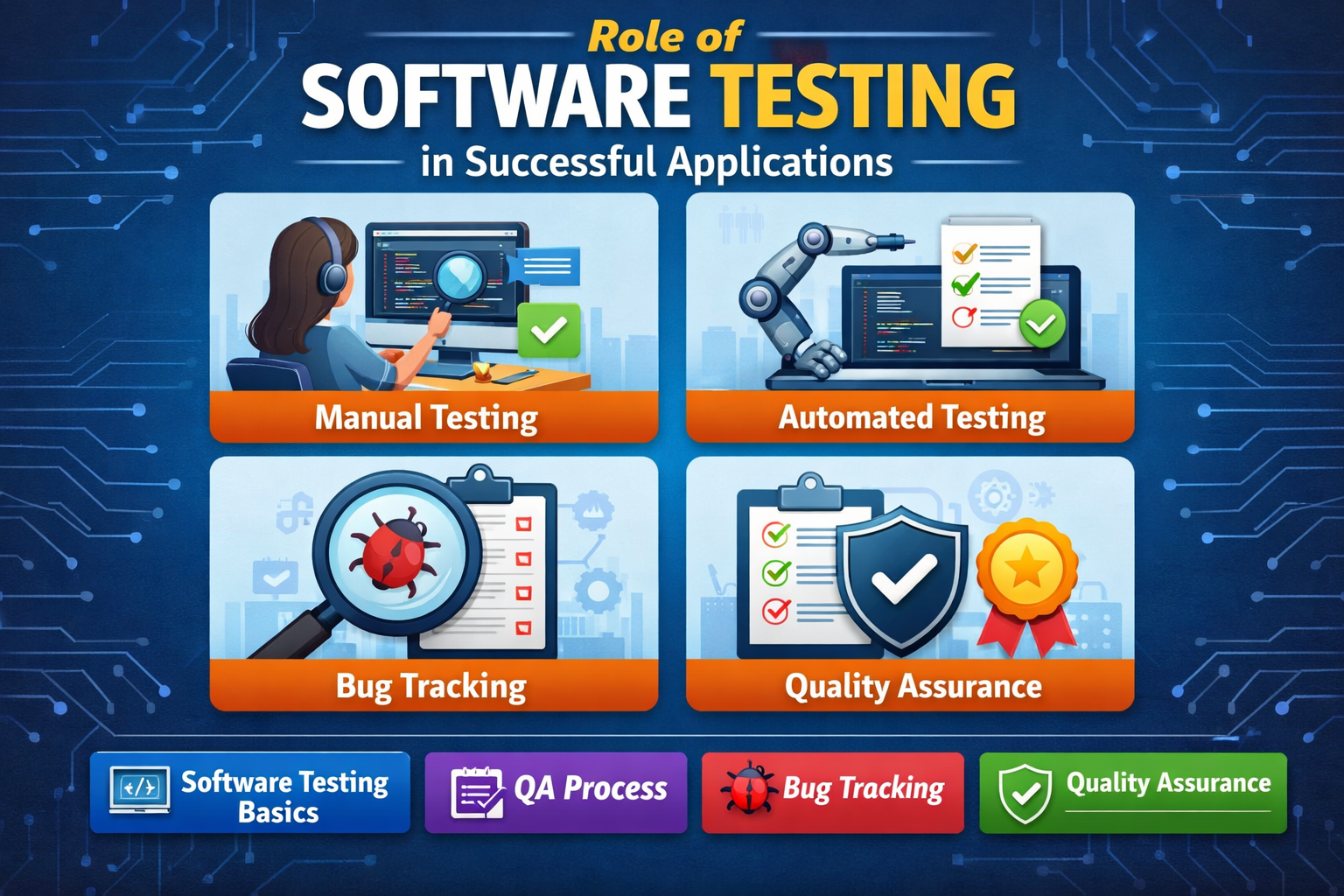
1. Manual Testing
Manual testing involves testers executing test cases without using automation tools. It is essential for exploratory testing and understanding user experience.
Key Benefits:
- Detects usability issues
- Useful for small projects and early stages
- Flexible and easy to adapt
- Helps understand real user behavior
Manual testing plays an important role in identifying issues that automated scripts may miss.
2. Automated Testing
Automated testing uses tools and scripts to execute test cases automatically. It is widely used for repetitive and large-scale testing.
Key Benefits:
- Saves time and effort
- Increases testing efficiency
- Ideal for regression testing
- Provides faster feedback
Automation improves the speed and accuracy of the QA process.
3. Bug Tracking
Bug tracking is the process of identifying, recording, and managing defects found during testing.
Key Benefits:
- Helps prioritize issues
- Improves team communication
- Ensures timely resolution of bugs
- Maintains project quality
A proper bug tracking system ensures that no issue goes unnoticed.
4. Quality Assurance (QA)
Quality assurance focuses on improving the overall development process to prevent defects.
Key Benefits:
- Ensures consistent quality standards
- Reduces production issues
- Improves customer satisfaction
- Builds reliable software systems
QA is not just about testing—it is about building quality from the beginning.
Why Software Testing is Important
1. Ensures Reliability
Testing ensures that the application performs as expected under different conditions.
2. Improves Security
It helps identify vulnerabilities and protect user data.
3. Enhances User Experience
A well-tested application provides a smooth and error-free experience.
4. Reduces Costs
Fixing bugs early is much cheaper than fixing them after deployment.
Best Practices for Software Testing
- Start testing early in the development cycle
- Combine manual and automated testing
- Maintain proper documentation
- Use effective bug tracking systems
- Continuously improve the QA process
Conclusion
Software testing is essential for building successful and reliable applications. From manual testing to automated testing, bug tracking, and quality assurance, each step contributes to delivering high-quality software.
By following proper testing practices, teams can reduce risks, improve performance, and ensure long-term success.