Introduction
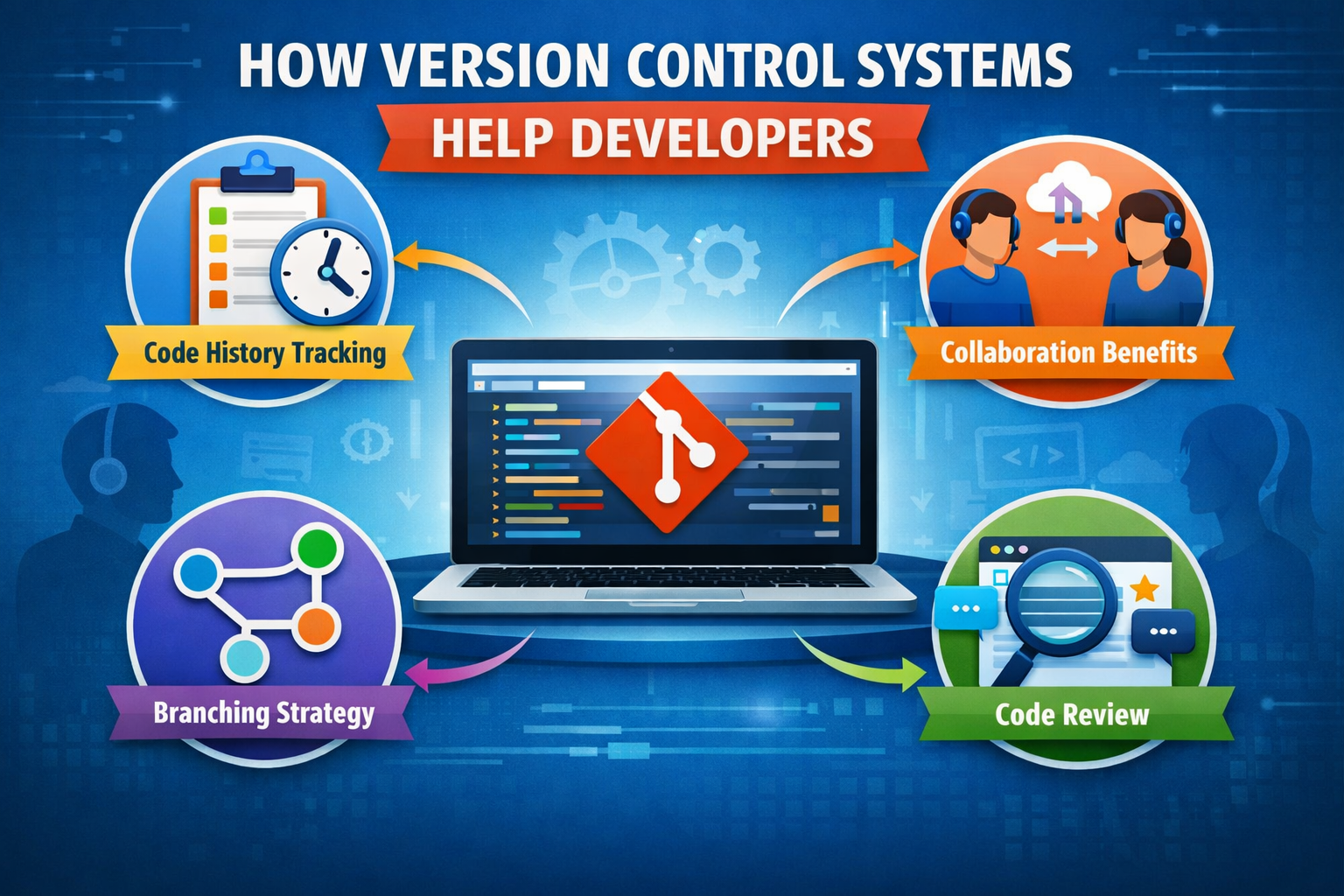
Version control systems are essential tools in modern software development. They help developers manage code efficiently, track changes, and collaborate seamlessly. Understanding version control systems and Git workflow is crucial for building scalable and maintainable applications.
What is a Version Control System?
A version control system (VCS) is a tool that helps developers track and manage changes in code over time. It allows teams to work on projects simultaneously without conflicts and ensures that previous versions of code can be restored if needed.
1. Code History Tracking
One of the biggest advantages of using a version control system is the ability to track code history.
Key Benefits:
- Keeps a complete record of changes
- Helps identify when and why changes were made
- Allows rollback to previous versions
- Improves debugging and issue tracking
Code history tracking ensures transparency and accountability in development.
2. Collaboration Benefits
Version control systems make it easy for multiple developers to work on the same project.
Key Benefits:
- Enables team collaboration without overwriting code
- Supports parallel development
- Reduces conflicts between developers
- Improves productivity and workflow efficiency
Collaboration becomes smoother and more organized with proper version control practices.
3. Branching Strategy
Branching allows developers to create separate environments for features, bug fixes, or experiments.
Key Benefits:
- Isolates new features from the main codebase
- Allows safe experimentation
- Supports structured development workflows
- Makes merging changes easier
A well-defined branching strategy is essential for managing complex projects.
4. Code Review
Version control systems support code review processes before merging changes.
Key Benefits:
- Improves code quality
- Helps catch bugs early
- Encourages knowledge sharing
- Maintains coding standards
Code reviews ensure that only high-quality code is added to the project.
Why Version Control is Important
1. Improves Project Management
Developers can manage large projects more effectively with structured workflows.
2. Enhances Team Efficiency
Teams can work simultaneously without disrupting each other.
3. Reduces Risk
Version control helps recover lost or broken code easily.
4. Supports Continuous Development
It enables smooth integration and deployment processes.
Best Practices for Using Version Control Systems
- Commit changes regularly
- Write meaningful commit messages
- Use proper branching strategies
- Review code before merging
- Keep repositories organized
Conclusion
Version control systems are a backbone of modern software development. From tracking code history to enabling collaboration, managing branches, and conducting code reviews, they help developers build efficient and reliable applications.
By mastering version control systems and Git workflow, developers can significantly improve productivity and code quality.