Introduction
Software documentation is one of the most critical yet often overlooked aspects of software development. Whether you are building a small application or a large enterprise system, proper documentation ensures clarity, consistency, and long-term success. In today’s fast-paced development environment, teams that prioritize documentation gain a significant competitive advantage.
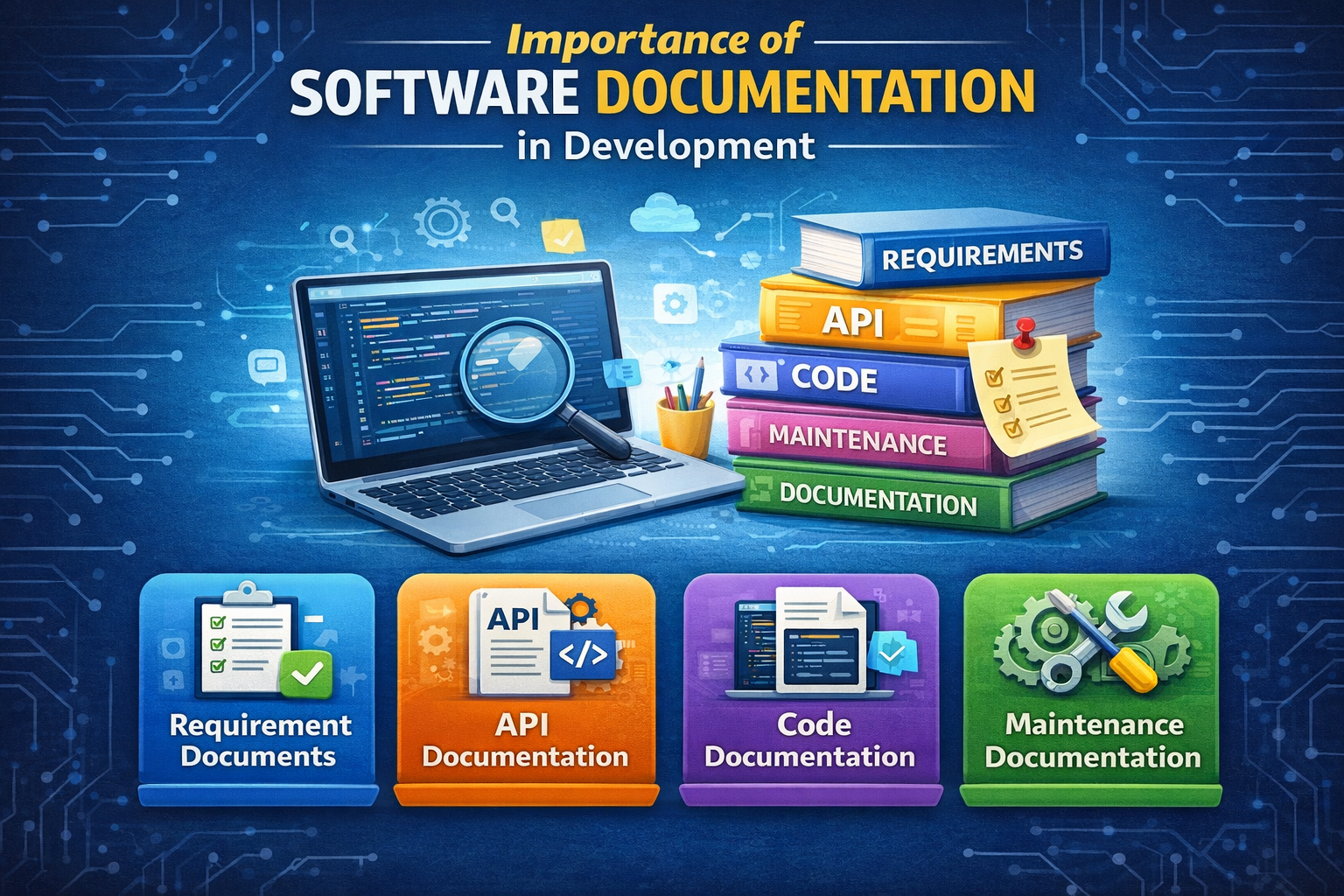
This blog explores the importance of software documentation, including requirement documents, API documentation, code documentation, and maintenance documentation.
What is Software Documentation?
Software documentation refers to written text or visual content that explains how software works, how it is built, and how it should be used. It serves as a guide for developers, stakeholders, and users.
1. Requirement Documents
Requirement documentation is the foundation of any software project. It defines what needs to be built and ensures alignment between stakeholders and developers.
Key Benefits:
- Clear understanding of project goals
- Reduces misunderstandings between teams
- Helps in project planning and estimation
- Acts as a reference throughout development
Without proper requirement documents, projects often face scope creep, delays, and increased costs.
2. API Documentation
API documentation explains how different software components interact with each other. It is especially important in modern applications that rely on integrations and third-party services.
Key Benefits:
- Simplifies integration with external systems
- Helps developers understand endpoints, parameters, and responses
- Improves developer experience
- Reduces onboarding time for new developers
Good API documentation can significantly improve the usability and scalability of your application.
3. Code Documentation
Code documentation includes comments, README files, and technical explanations written within the codebase.
Key Benefits:
- Makes code easier to understand
- Helps new developers onboard quickly
- Reduces dependency on individual developers
- Improves code maintainability
Clean and well-documented code is easier to debug, extend, and optimize.
4. Maintenance Documentation
Maintenance documentation is used after the software is deployed. It helps teams manage updates, bug fixes, and system improvements.
Key Benefits:
- Ensures smooth updates and upgrades
- Helps identify system dependencies
- Reduces downtime during maintenance
- Supports long-term sustainability of the project
Maintenance documentation is crucial for scaling software and ensuring reliability over time.
Why Software Documentation is Important
1. Improves Communication
Documentation acts as a bridge between developers, stakeholders, and users.
2. Saves Time and Cost
Proper documentation reduces errors, rework, and confusion, saving both time and money.
3. Enhances Collaboration
Teams can work more efficiently when information is clearly documented and accessible.
4. Supports Scalability
As projects grow, documentation helps maintain consistency and structure.
5. Ensures Knowledge Transfer
Documentation prevents knowledge loss when team members leave the organization.
Best Practices for Software Documentation
- Keep documentation clear and concise
- Update documentation regularly
- Use diagrams and examples where possible
- Follow standard formats and templates
- Make documentation easily accessible
Conclusion
Software documentation is not just an optional task—it is a necessity for successful software development. From requirement documents to maintenance documentation, each type plays a vital role in ensuring project success.
By investing time in proper documentation, businesses can improve efficiency, reduce risks, and build scalable, high-quality software systems.
Keywords
Software documentation importance, Technical documentation, Requirement documents, API documentation, Code documentation, Maintenance documentation