SQL for Data Analysis Course – Complete Beginner to Advanced Guide
Introduction
If you are looking to build a career in data analytics, learning SQL for data analysis is one of the most important steps. This complete SQL course is designed for beginners and professionals who want to master database querying, data cleaning, transformation, and real-world analytics using SQL.
This course covers everything from SQL basics to advanced concepts like joins, subqueries, window functions, and real-world projects used in companies.
What You Will Learn in This SQL Course
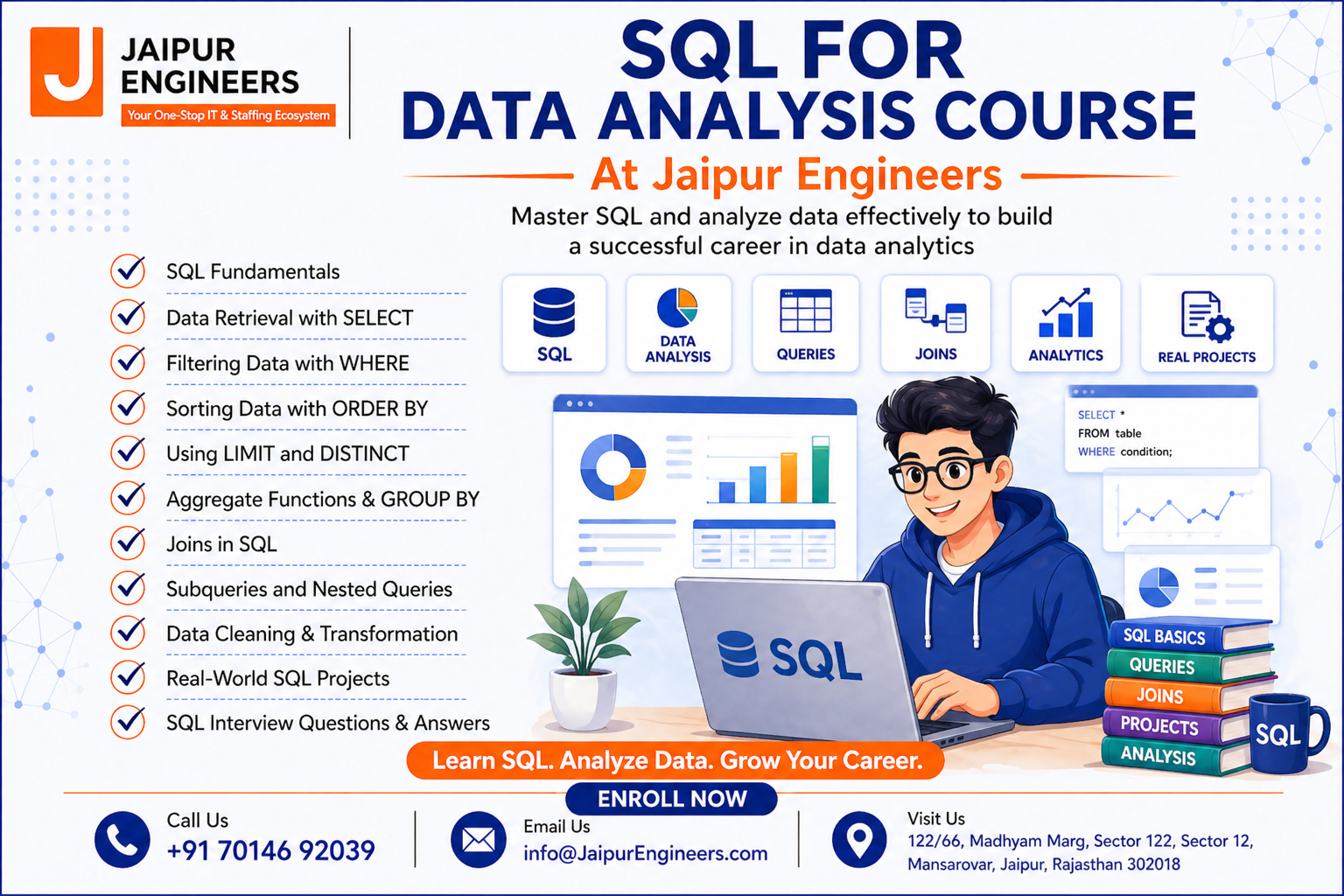
- SQL fundamentals and database concepts
- Writing queries using SELECT, WHERE, ORDER BY
- Data aggregation using GROUP BY and HAVING
- SQL joins (INNER, LEFT, RIGHT, FULL)
- Subqueries and advanced SQL techniques
- Data cleaning and transformation
- Working with dates and time-based analysis
- Window functions for advanced analytics
- Real-world projects and case studies
- SQL interview preparation
Course Modules Overview
Module 1: Introduction to SQL & Data Analysis
Learn what SQL is, how databases work, and how to set up MySQL for practice.
Module 2: Basic SQL Queries
Master SELECT, filtering data, sorting, and extracting meaningful information from tables.
Module 3: Advanced Filtering & Aggregation
Understand aggregate functions, GROUP BY, and HAVING for data summarization.
Module 4: SQL Joins
Learn how to combine data from multiple tables using different types of joins.
Module 5: Subqueries & Advanced SQL
Write complex queries using subqueries, nested queries, and CASE statements.
Module 6: SQL for Data Analysis
Perform data cleaning, transformation, and time-based analysis using SQL.
Module 7: Real-World Projects
Work on projects like sales analysis, customer segmentation, and dashboard creation.
Module 8: Interview Preparation
Prepare for SQL interviews with commonly asked questions and real scenarios.
Why Learn SQL for Data Analysis
SQL is used by almost every company to manage and analyze data. It is one of the most in-demand skills for data analysts, business analysts, and data scientists.
Benefits of learning SQL:
- High demand in the job market
- Used in real-world business analysis
- Easy to learn for beginners
- Essential for data-driven decision making
Who Should Take This Course
- Beginners who want to learn data analysis
- Students preparing for IT careers
- Working professionals switching to data roles
- Developers who want to learn SQL analytics
Tools Covered in This Course
- MySQL
- MySQL Workbench
These tools are widely used in industry for SQL development and data analysis.
Career Opportunities After This Course
After completing this SQL for data analysis course, you can apply for roles such as:
- Data Analyst
- Business Analyst
- SQL Developer
- Data Scientist (entry-level)
Course Highlights
- Beginner to advanced structured curriculum
- Hands-on SQL queries and projects
- Real-world case studies
- Interview preparation
- Industry-relevant skills
FAQs
1. Is SQL enough for data analysis?
SQL is a core skill, but combining it with Excel, Power BI, or Python is recommended.
2. How long does it take to learn SQL?
You can learn basics in a few weeks and advanced concepts in 1–2 months with practice.
3. Do I need coding experience to learn SQL?
No, SQL is beginner-friendly and easy to learn.
4. Which database should beginners start with?
MySQL is one of the best options for beginners.
Internal Link
Want to explore more courses?
Click here for more free courses
Instructor

Popular Courses