Introduction
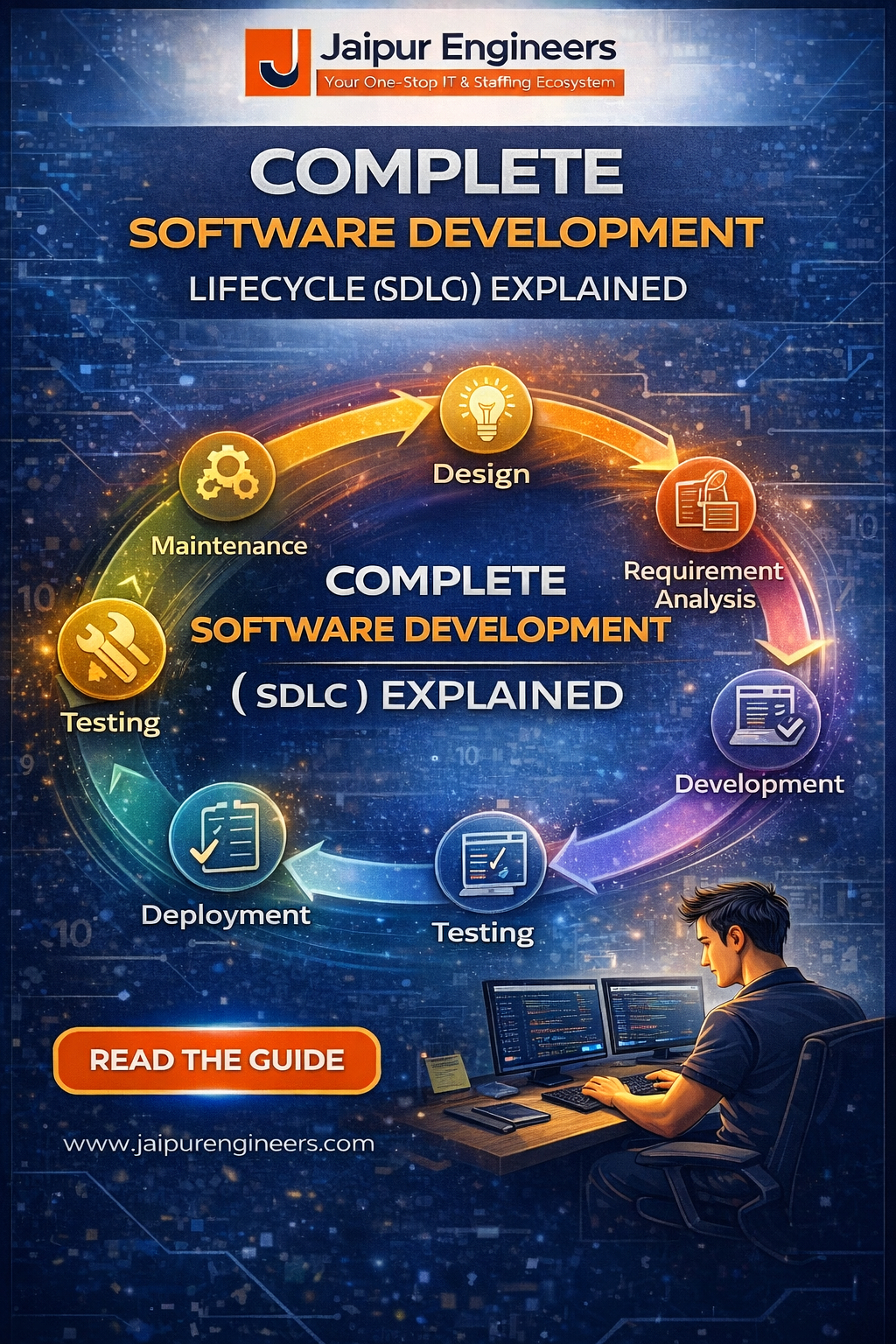
Software development is a structured process used by companies to design, build, test, and maintain applications. This process is commonly known as the Software Development Lifecycle (SDLC). It provides a clear framework that helps development teams build reliable and scalable software products.
Understanding SDLC phases helps students and developers learn how real software systems are created in professional environments.
1. Planning Phase
The planning phase is the starting point of every software project. In this stage, teams identify the purpose of the application and evaluate whether the project is feasible.
Activities in this phase include:
- Defining project goals
- Identifying potential risks
- Estimating budget and timeline
- Determining required resources
Proper planning helps organizations avoid delays and manage project scope effectively.
2. Requirement Analysis
During requirement analysis, developers and stakeholders clearly define what the software should do.
This stage focuses on:
- Gathering functional requirements
- Identifying system features
- Understanding user needs
- Preparing requirement documents
These requirements are usually documented in a Software Requirement Specification (SRS).
3. Design Phase
In the design phase, developers plan how the system will be built. Architects and engineers define the technical structure of the software.
Design activities include:
- System architecture planning
- Database design
- User interface design
- Technology selection
This stage creates a blueprint for the development process.
4. Development Phase
The development phase is where programmers begin writing the actual code.
Developers:
- Implement application features
- Build backend and frontend components
- Integrate databases
- Follow coding standards
This phase often involves collaboration between multiple developers working on different modules.
5. Testing Phase
Testing ensures that the software works correctly and meets the defined requirements.
Common testing activities include:
- Functional testing
- Performance testing
- Security testing
- Bug identification
Testing helps detect issues before the application is released to users.
6. Deployment Phase
After testing is complete, the software is released to users through the deployment process.
Deployment activities may include:
- Installing the application on servers
- Configuring system environments
- Launching the software for users
This stage makes the software available in real-world environments.
7. Maintenance Phase
Software development does not end after deployment. Applications require ongoing maintenance and improvements.
Maintenance tasks include:
- Fixing bugs
- Improving performance
- Adding new features
- Updating security
This phase ensures that the software continues to function effectively over time.
Conclusion
The Software Development Lifecycle (SDLC) provides a systematic approach for building software applications. From planning and requirement analysis to deployment and maintenance, each phase plays a critical role in delivering successful software products.
Understanding SDLC helps students and developers learn how professional software teams manage real-world projects.