Introduction
Software development projects follow structured methodologies that guide how teams plan, build, and deliver software. Two of the most widely used software development models are the Waterfall model and Agile methodology.
Understanding the differences between Agile and Waterfall helps developers, students, and organizations choose the right approach for their projects.
The Traditional Waterfall Model
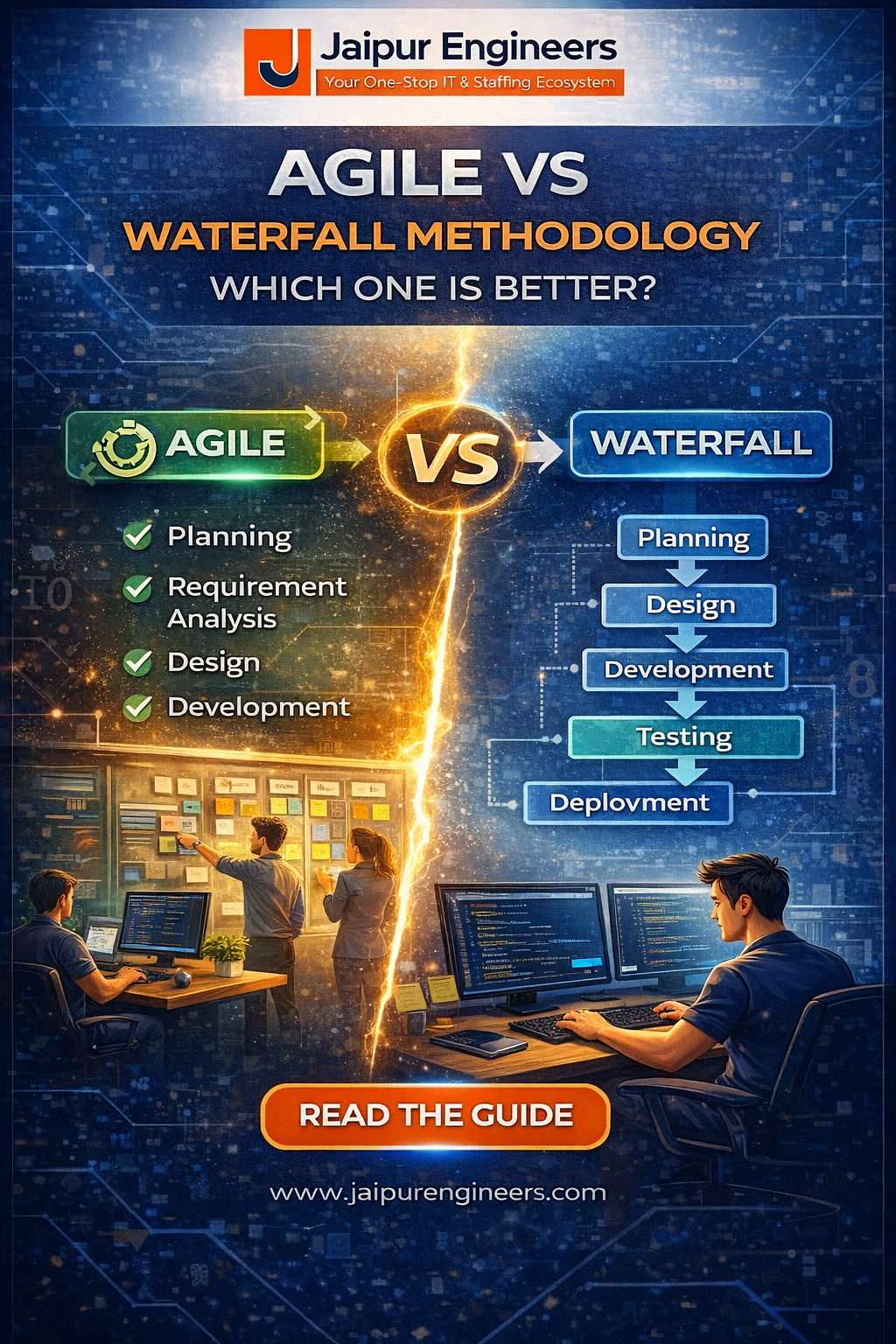
The Waterfall model is one of the earliest software development methodologies. It follows a linear and sequential process where each phase must be completed before moving to the next.
Typical phases include:
- Requirement gathering
- System design
- Development
- Testing
- Deployment
In the Waterfall approach, requirements are usually fixed at the beginning of the project.
Advantages of Waterfall
- Clear structure and documentation
- Easy to understand project phases
- Suitable for projects with stable requirements
Limitations of Waterfall
- Difficult to change requirements later
- Late discovery of problems during testing
- Less flexibility for evolving projects
Agile Methodology
Agile is a modern software development approach designed to be flexible and adaptive. Instead of completing the entire project in one long cycle, Agile divides development into smaller iterations called sprints.
Each sprint typically includes:
- Planning
- Development
- Testing
- Review
This allows teams to release features incrementally and gather feedback quickly.
Advantages of Agile
- Flexible and adaptable to change
- Faster feedback cycles
- Continuous improvement of the product
Scrum Framework in Agile
Scrum is one of the most commonly used Agile frameworks.
It organizes work into short development cycles called sprints, usually lasting two to four weeks.
Key roles in Scrum include:
- Product Owner
- Scrum Master
- Development Team
Regular meetings such as sprint planning and daily standups help teams stay aligned.
When Companies Use Each Model
Organizations choose development methodologies based on project needs.
Waterfall is often used when:
- Requirements are clearly defined
- Projects have strict regulations
- Systems require detailed documentation
Agile is often used when:
- Requirements evolve over time
- Teams want rapid development cycles
- Continuous user feedback is important
Many modern software companies prefer Agile because it allows faster iteration and adaptability.
Conclusion
Both Agile and Waterfall methodologies have their advantages depending on the project environment. Waterfall provides a structured and predictable process, while Agile offers flexibility and faster development cycles.
Understanding these software development models helps students and developers see how professional teams manage real software projects.