


Supervised Learning – Regression and Classification
Introduction

In Machine Learning, Supervised Learning is one of the most widely used techniques. It is mainly divided into two types: Regression and Classification.
Understanding the difference between regression and classification is essential for choosing the right model for your AI project.
What is Supervised Learning?
Supervised Learning is a Machine Learning approach where models are trained using labeled data (input + correct output).
The model learns patterns and makes predictions on new data.
What is Regression in Machine Learning?
Regression is used when the output is a continuous numerical value.
Examples of Regression
- Predicting house prices
- Forecasting sales
- Temperature prediction
Linear Regression Formula
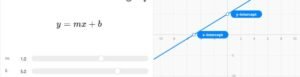
Key Features of Regression
- Output is numeric
- Predicts values
- Finds relationships between variables
What is Classification in Machine Learning?
Classification is used when the output is a category or label.
Examples of Classification
- Spam vs Not Spam
- Disease detection
- Image classification
Logistic Regression Concept
P(y=1∣x)=1/(1+e^−z)
Key Features of Classification
- Output is categorical
- Assigns labels
- Used for decision-making
Regression vs Classification – Key Differences
| Feature | Regression | Classification |
|---|---|---|
| Output Type | Continuous values (numbers) | Discrete categories (labels) |
| Example | House price prediction | Spam detection |
| Goal | Predict numerical value | Assign class |
| Algorithms | Linear Regression | Logistic Regression, SVM |
| Evaluation | MSE, RMSE | Accuracy, Precision, Recall |
When to Use Regression vs Classification
Use Regression When:
- Output is numeric
- You need prediction values
- Example: Price prediction
Use Classification When:
- Output is categorical
- You need decision-based results
- Example: Fraud detection
Popular Algorithms
Regression Algorithms
- Linear Regression
- Polynomial Regression
- Ridge/Lasso Regression
Classification Algorithms
- Logistic Regression
- Decision Trees
- Support Vector Machines (SVM)
- k-Nearest Neighbors (KNN)
Real-World Applications
Regression Applications
- Real estate pricing
- Stock market prediction
- Demand forecasting
Classification Applications
- Email spam detection
- Medical diagnosis
- Customer churn prediction
Companies like Amazon and Google use both techniques in their AI systems.
Advantages of Regression
- Easy to interpret
- Good for numerical predictions
- Widely used in analytics
Advantages of Classification
- Useful for decision-making
- Works well with categorical data
- High accuracy in classification tasks
Limitations
Regression
- Sensitive to outliers
- Assumes linear relationships
Classification
- Requires balanced data
- Can be biased
Internal Learning Resource
To explore more Machine Learning and AI courses, click here for more free courses.
Conclusion
Regression and Classification are the two main types of supervised learning. Regression predicts numerical values, while classification assigns categories.
Choosing the right approach depends on your problem type and data.
Frequently Asked Questions (FAQs)
What is the difference between regression and classification?
Regression predicts numbers, while classification predicts categories.
Is logistic regression classification or regression?
It is a classification algorithm.
Which is easier regression or classification?
Regression is generally easier to understand.
Where is regression used?
In price prediction, forecasting, and analytics.
Where is classification used?
In spam detection, medical diagnosis, and AI systems.