


Training Neural Networks – Backpropagation and Loss Functions
Training Neural Networks – Backpropagation and Loss Functions Explained
Introduction

Training a neural network is the process of teaching it how to make accurate predictions. This is done by adjusting weights based on errors using techniques like backpropagation and loss functions.
In this lesson, you will learn how neural networks are trained, what loss functions are, how backpropagation works, and why these concepts are critical in Deep Learning.
What Does Training a Neural Network Mean?
Training means improving the model’s performance by reducing prediction errors.
The process includes:
- Forward propagation
- Loss calculation
- Backpropagation
- Weight updates
This cycle continues until the model becomes accurate.
Forward Propagation
Forward propagation is the process of passing input data through the network to generate output.
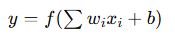
The output is then compared with the actual value.
What is a Loss Function?
A loss function measures how far the predicted output is from the actual output.
Example: Mean Squared Error (MSE)
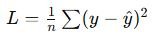
Types of Loss Functions
- Mean Squared Error (Regression)
- Binary Cross-Entropy (Binary classification)
- Categorical Cross-Entropy (Multi-class classification)
Loss functions guide the learning process.
What is Backpropagation?
Backpropagation is the process of updating weights by calculating gradients of the loss function.
Backpropagation Formula Concept
∂L/∂w
It calculates how much each weight contributes to the error.
How Backpropagation Works
- Perform forward propagation
- Calculate loss
- Compute gradients using derivatives
- Update weights using optimization (like Gradient Descent)
- Repeat
This allows the network to learn from mistakes.
Role of Activation Functions in Training
Activation functions help the network learn non-linear patterns.
Common functions:
- ReLU
- Sigmoid
- Tanh
They are essential for effective learning.
Why Backpropagation is Important
Backpropagation is important because:
- It enables learning in neural networks
- It reduces prediction error
- It improves model accuracy
- It is used in all deep learning models
Without backpropagation, training neural networks would not be possible.
Real-World Applications
Training neural networks is used in:
- Image recognition systems
- Speech recognition
- Chatbots and NLP systems
- Autonomous vehicles
Companies like Google and Tesla use advanced training techniques in their AI models.
Common Challenges in Training
- Overfitting
- Vanishing gradients
- Slow convergence
- High computational cost
Understanding training techniques helps overcome these challenges.
Internal Learning Resource
To explore more Deep Learning and AI courses, click here for more free courses.
Conclusion
Training neural networks involves forward propagation, loss calculation, and backpropagation. These processes help the model learn and improve over time.
In the next lesson, you will learn about Deep Learning frameworks like TensorFlow and PyTorch.
Frequently Asked Questions (FAQs)
What is backpropagation?
Backpropagation is the process of updating weights based on error gradients.
What is a loss function?
A loss function measures the difference between predicted and actual values.
Why is training important in Deep Learning?
Training helps the model learn patterns and improve accuracy.
What is forward propagation?
It is the process of passing input data through the network to get output.
Which loss function is used for regression?
Mean Squared Error is commonly used.
Can neural networks learn without backpropagation?
No, backpropagation is essential for training neural networks.