Introduction
Software deployment process is an essential part of modern application development. It ensures that applications are delivered smoothly from development to the end users without errors. Understanding application deployment helps beginners learn how real-world software systems are released and maintained.
What is Software Deployment?
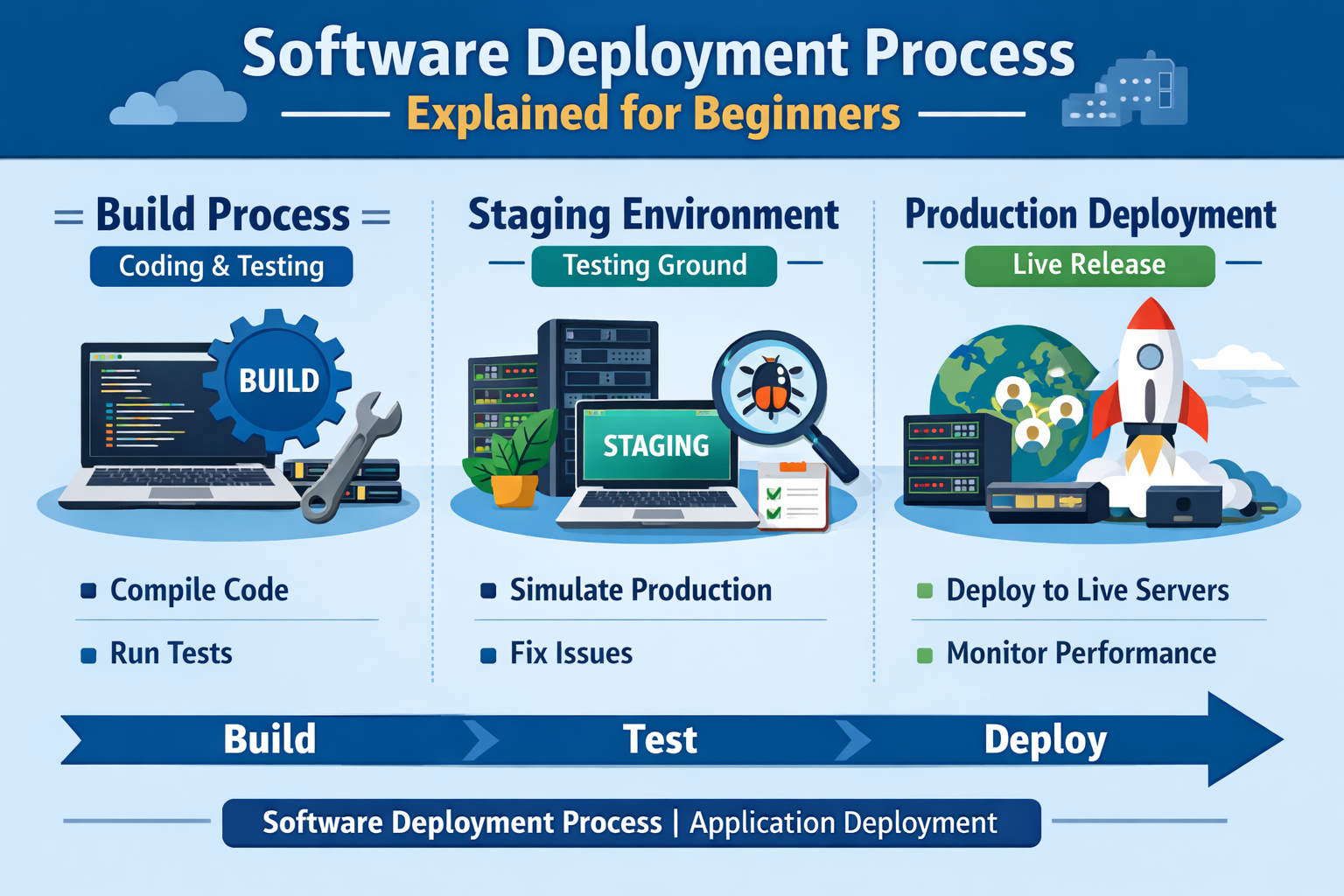
Software deployment is the process of making an application available for use. It includes building the application, testing it in controlled environments, and finally releasing it to production.
1. Build Process
The build process is the first step in deployment where the application code is compiled and prepared for release.
Key Benefits:
- Converts source code into executable form
- Detects early errors in code
- Prepares application for testing
- Ensures consistency in builds
A proper build process helps in creating stable and reliable software.
2. Staging Environment
A staging environment is a replica of the production environment used for testing before final deployment.
Key Benefits:
- Tests application in real-like conditions
- Identifies issues before release
- Ensures compatibility and performance
- Reduces risks in production
Staging acts as a safety layer before the final release.
3. Production Deployment
Production deployment is the final step where the application is released to real users.
Key Benefits:
- Makes application live for users
- Delivers new features and updates
- Requires monitoring for performance
- Ensures system stability
Proper production deployment ensures a smooth user experience.
Why Software Deployment is Important
1. Ensures Smooth Release
Deployment helps in delivering applications without major issues.
2. Improves Reliability
Structured deployment reduces system failures.
3. Enhances User Experience
Well-deployed applications perform better for users.
4. Supports Continuous Updates
Makes it easier to release updates and improvements.
Best Practices for Software Deployment
- Automate the build and deployment process
- Test thoroughly in staging environments
- Monitor applications after deployment
- Maintain rollback strategies
- Follow structured deployment pipelines
Conclusion
Software deployment process is a crucial step in application development. From build process to staging environment and production deployment, each stage ensures that software is reliable and ready for users.
By understanding deployment practices, developers can build and release applications more efficiently and confidently.