Introduction
Creating a freelance portfolio is not just about showing your work — it’s about convincing clients to hire you. Most beginners make the mistake of uploading random projects without strategy. If you want consistent freelance projects, your portfolio must act like a sales machine.
In this developer portfolio guide, we will cover proven freelance portfolio tips that help you stand out and attract high-paying clients.
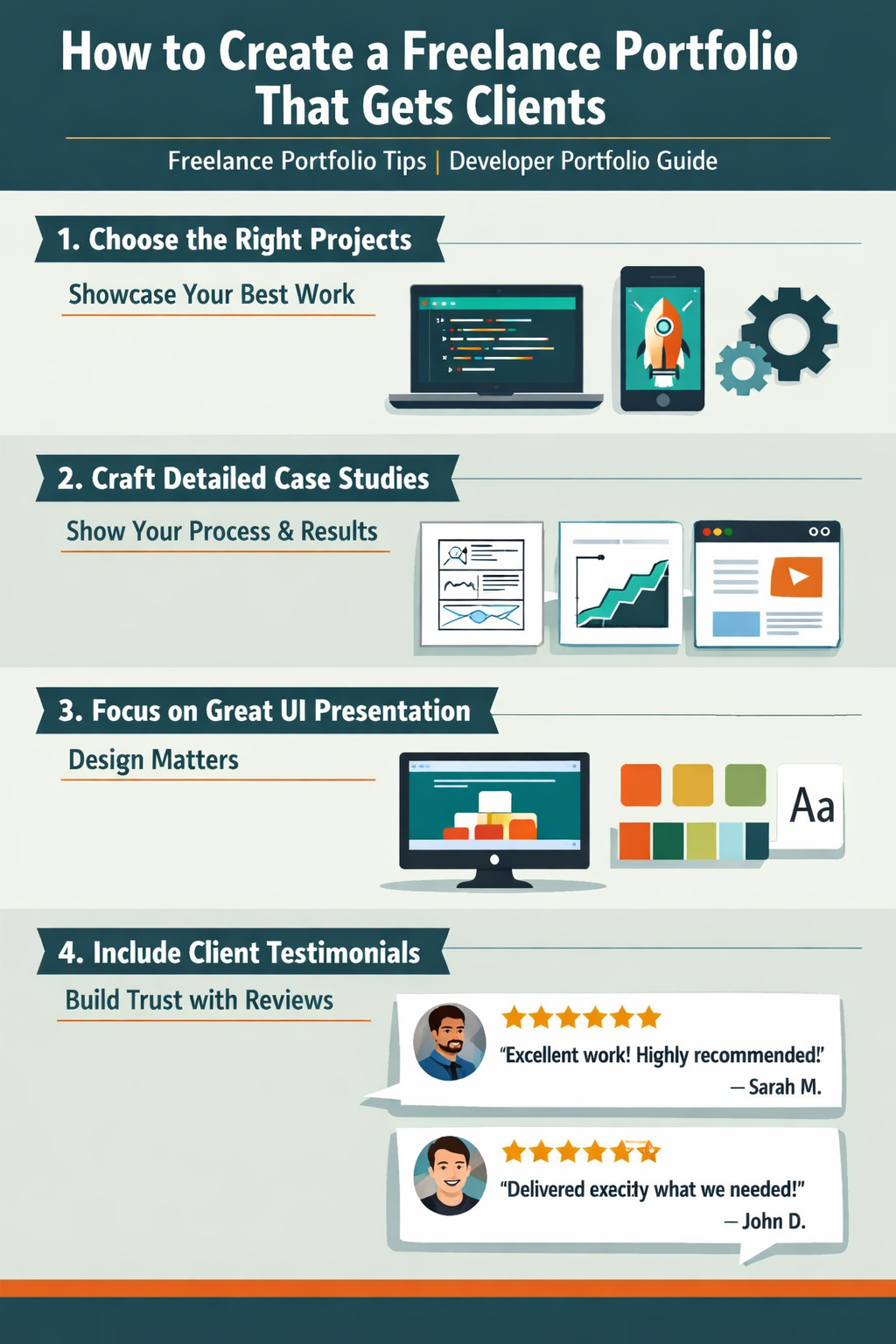
1. Projects Selection (Quality > Quantity)
One of the biggest mistakes developers make is adding too many average projects. Clients don’t want to scroll through 20 projects — they want to see 3–5 strong, relevant projects.
What to Include:
- Real-world projects (E-commerce, dashboards, business websites)
- Problem-solving projects
- Niche-specific work (e.g., healthcare, education, fintech)
Pro Tip:
If you don’t have client work, create mock projects that look real:
- Food delivery app UI
- Admin dashboard for business analytics
- Local business website redesign
2. Case Studies (This Gets You Clients)
A simple project screenshot is not enough. Clients want to understand your thinking process.
Structure of a Strong Case Study:
- Problem: What issue did the client face?
- Solution: What did you build?
- Process: Tools & technologies used
- Result: Measurable outcome (traffic, conversions, speed improvement)
Example:
Instead of writing:
“Created a website using React”
Write:
“Built a fast-loading React website that improved user engagement by 40% and reduced bounce rate.”
3. UI Presentation (First Impression Matters)
Your portfolio design itself is your first project.
Must-Have UI Elements:
- Clean layout with proper spacing
- Light professional color scheme (light blue, white, soft gradients)
- Mobile responsive design
- Fast loading speed
Sections You Should Include:
- Hero section (who you are + what you do)
- Featured projects
- Case studies
- About section
- Contact CTA (Call-to-Action)
Pro Tip:
Use tools like Figma before building your portfolio to design layout professionally.
4. Client Testimonials (Trust Builder)
Social proof is one of the most powerful elements in your portfolio.
How to Get Testimonials:
- Ask past clients after project completion
- Offer free/discounted work in exchange for feedback (initial stage)
What Makes a Strong Testimonial:
- Specific results
- Client name & role
- Business impact
Example:
“Working with him increased our website leads by 2x within 3 months.”
5. Bonus: Add Conversion Elements
A portfolio should not just inform — it should convert.
Add These:
- “Hire Me” button
- WhatsApp contact link
- Calendly booking link
- Clear service offerings
6. Common Mistakes to Avoid
- Adding too many weak projects
- No case studies
- Poor UI/UX design
- No contact CTA
- Copy-paste portfolios
Conclusion
A strong freelance portfolio is your biggest asset in freelancing. Focus on quality projects, strong case studies, clean UI, and real testimonials. If done correctly, your portfolio will start bringing clients automatically.
Call to Action
Start building your portfolio today and turn your skills into income.