Introduction
A career in data analytics is one of the fastest-growing paths for students today. By following a structured learning approach and focusing on practical skills, beginners can build strong foundations and become job-ready in the data domain.
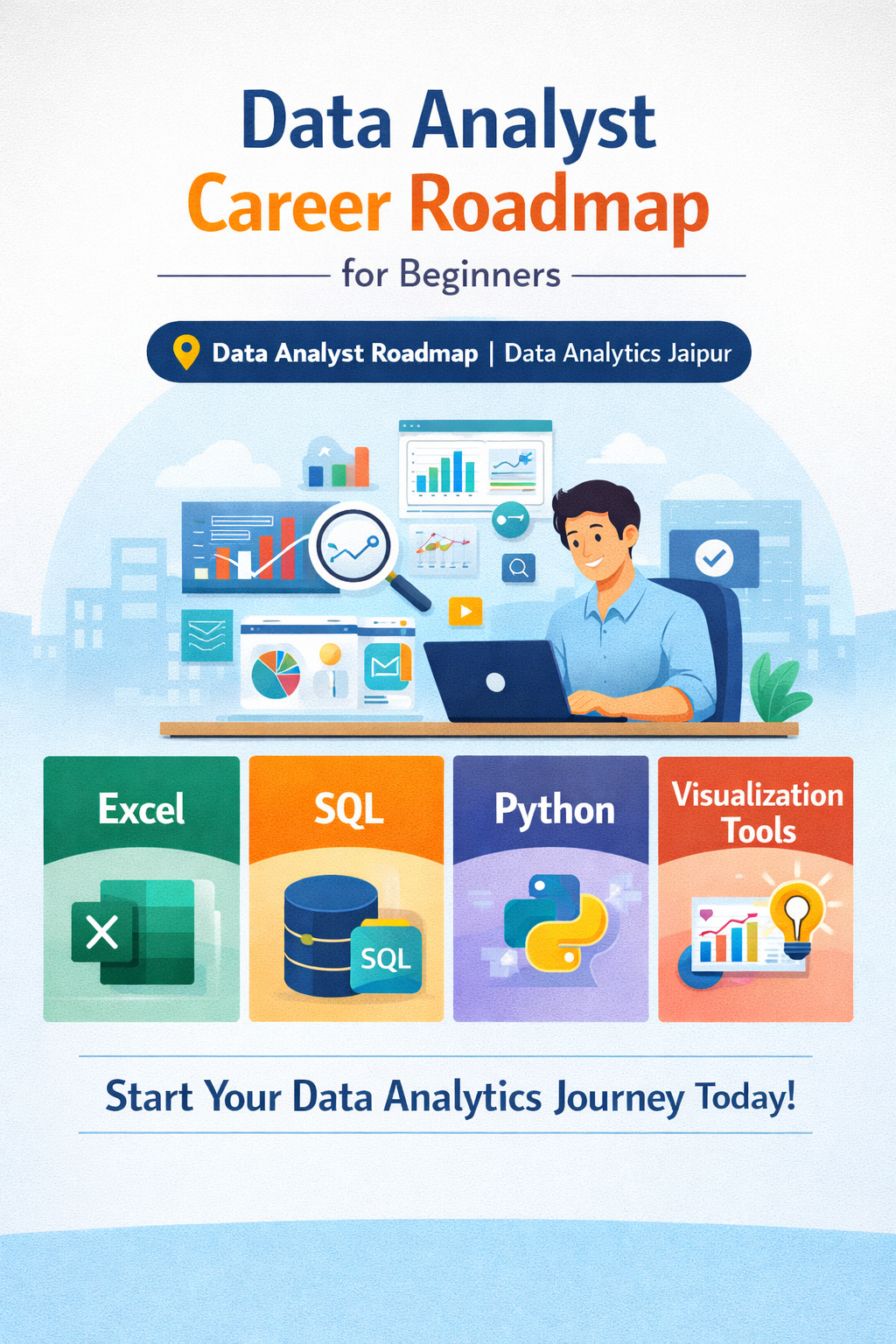
Step 1: Learn Excel
Excel is often the starting point for data analysis.
What to Learn:
- Data cleaning and formatting
- Basic formulas and functions
- Pivot tables and charts
Key Benefits:
- Quick data handling
- Easy analysis of small datasets
- Foundation for advanced tools
Step 2: Learn SQL
SQL is used to extract and manage data from databases.
What to Learn:
- Basic queries (SELECT, WHERE, JOIN)
- Data filtering and aggregation
- Database structure understanding
Key Benefits:
- Efficient data retrieval
- Working with real databases
- Industry-required skill
Step 3: Learn Python
Python helps in advanced data analysis and automation.
What to Learn:
- Basics of Python
- Libraries like Pandas and NumPy
- Data cleaning and processing
Key Benefits:
- Automation of tasks
- Handling large datasets
- Advanced data analysis
Step 4: Visualization Tools
Visualization helps in presenting data clearly.
Tools to Learn:
- Power BI
- Tableau
Key Benefits:
- Better data presentation
- Business insights generation
- Decision-making support
Step 5: Business Insights
Understanding data is not enough—you must extract insights.
What to Focus On:
- Interpreting data trends
- Making data-driven decisions
- Communicating findings
Key Benefits:
- Real-world problem solving
- Value creation for businesses
- Career growth opportunities
Why This Roadmap Works
1. Step-by-Step Learning
Builds strong fundamentals first.
2. Practical Approach
Focuses on real-world data handling.
3. Industry Relevance
Covers tools used in companies.
4. Job Readiness
Prepares students for real roles.
Best Tips for Students
- Practice with real datasets
- Build small projects
- Learn step by step
- Focus on understanding, not memorizing
- Stay consistent
Conclusion
By following this roadmap and focusing on practical skills, beginners can build a strong foundation in data analytics. With consistent learning and project experience, students can move towards real opportunities and career growth.