


Introduction to Deep Learning and Neural Networks
Deep Learning and Neural Networks – Complete Beginner Guide

Introduction to Deep Learning
Deep Learning is a powerful subset of Machine Learning that uses neural networks to solve complex problems such as image recognition, speech processing, and natural language understanding.
In this lesson, you will learn what Deep Learning is, how neural networks work, and why they are important in Artificial Intelligence.
What is Deep Learning?
Deep Learning is a type of Machine Learning that uses multi-layered neural networks to learn patterns from large amounts of data.
It is especially useful for handling unstructured data such as images, audio, and text.
What are Neural Networks?
Neural Networks are computational models inspired by the human brain. They consist of layers of interconnected nodes (neurons) that process information.
Structure of a Neural Network
A basic neural network consists of:
- Input Layer
- Hidden Layers
- Output Layer
Each layer processes data and passes it to the next layer.
How Neural Networks Work
Neural networks process data through weighted connections and activation functions.
Basic Representation
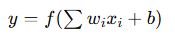
Where:
- xi are inputs
- wi are weights
- b is bias
- f is activation function
The network learns by adjusting weights to minimize error.
Activation Functions
Activation functions introduce non-linearity into neural networks.
Common Activation Functions
- ReLU (Rectified Linear Unit)
- Sigmoid
- Tanh
These functions help the network learn complex patterns.
Training a Neural Network
Neural networks are trained using:
- Forward propagation
- Loss calculation
- Backpropagation
- Weight updates using optimization
This process repeats until the model achieves good accuracy.
Why Deep Learning is Important
Deep Learning is important because:
- It handles large and complex datasets
- It improves accuracy in predictions
- It powers modern AI applications
- It enables automation of complex tasks
Real-World Applications of Deep Learning
Deep Learning is widely used in:
- Image recognition
- Speech recognition
- Natural Language Processing
- Autonomous vehicles
Companies like Google and Tesla use Deep Learning to build advanced AI systems.
Advantages of Deep Learning
- High accuracy
- Automatic feature extraction
- Handles unstructured data
- Scalable with large datasets
Limitations of Deep Learning
- Requires large data
- High computational cost
- Complex to understand
- Needs powerful hardware
Internal Learning Resource
To explore more advanced AI and Deep Learning courses, click here for more free courses.
Conclusion
Deep Learning is a key technology in Artificial Intelligence that uses neural networks to solve complex problems. Understanding its fundamentals is essential for building advanced AI systems.
In the next lesson, you will learn about different types of neural networks and their architectures.
Frequently Asked Questions (FAQs)
What is Deep Learning?
Deep Learning is a subset of Machine Learning that uses neural networks with multiple layers.
What are neural networks?
Neural networks are models inspired by the human brain used to process data.
Why is Deep Learning important?
It enables AI systems to solve complex problems like image and speech recognition.
What are activation functions?
Activation functions help neural networks learn non-linear patterns.
Is Deep Learning difficult to learn?
It can be complex, but beginners can learn it step by step.
Where is Deep Learning used?
It is used in healthcare, finance, autonomous vehicles, and many other industries.