Introduction
The gap between college education and real-world IT industry expectations is one of the biggest challenges students face today. Understanding the college vs industry gap and IT training reality helps students prepare better for their careers.
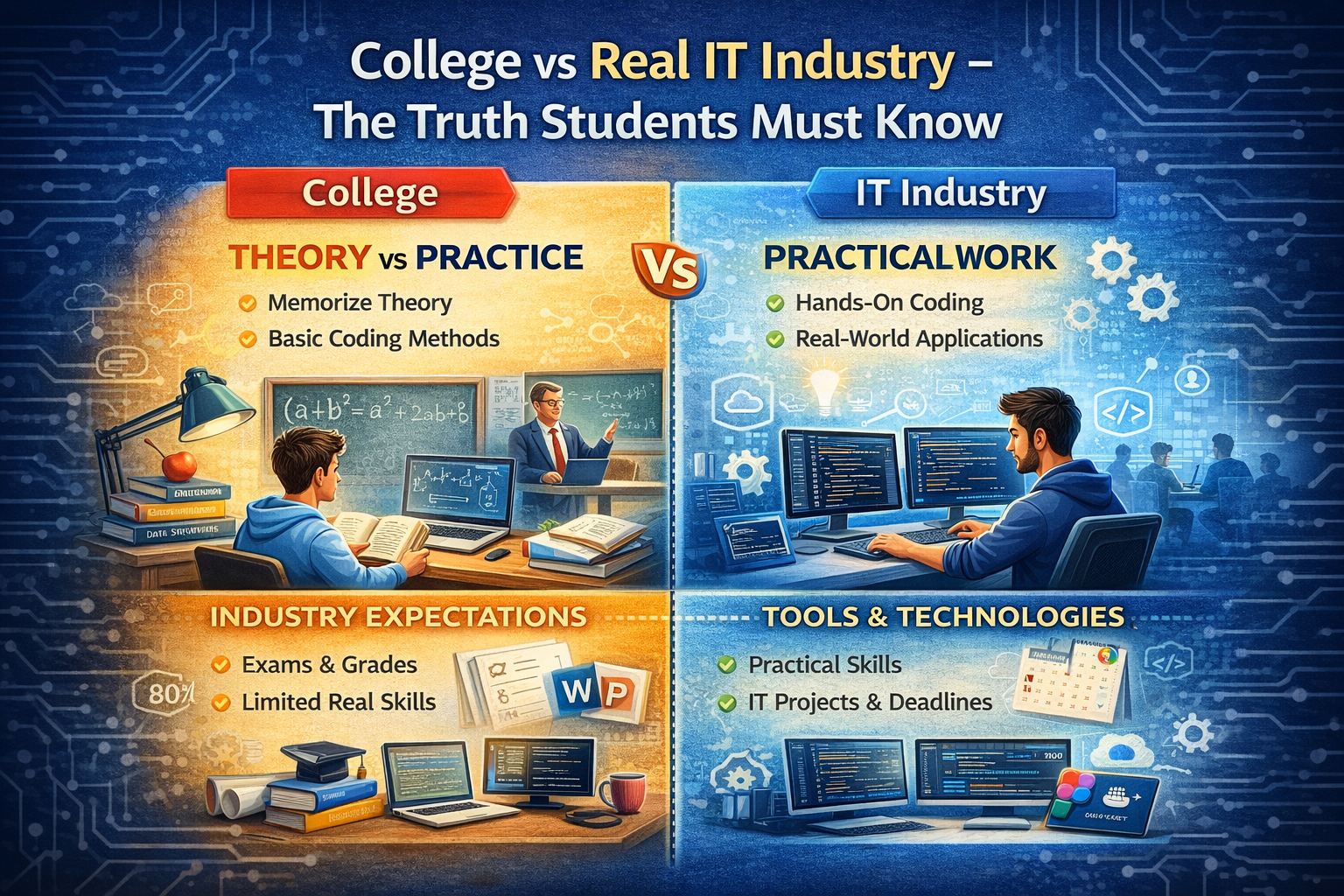
Theoretical Learning vs Practical Work
In most colleges, the focus is heavily on theoretical knowledge rather than practical implementation.
Key Differences:
- Colleges focus on concepts and exams
- Industry focuses on real-world problem solving
- Limited hands-on experience in college
- High demand for practical skills in companies
Practical knowledge is essential to apply concepts effectively in real projects.
Industry Expectations
Companies expect more than just basic knowledge from fresh graduates.
Key Expectations:
- Strong understanding of fundamentals
- Ability to work on real projects
- Problem-solving and logical thinking skills
- Familiarity with development workflows
Students need to align their learning with real industry requirements.
Tools & Technologies Gap
There is often a mismatch between tools taught in college and those used in the industry.
Key Issues:
- Outdated curriculum in many colleges
- Lack of exposure to modern tools
- No experience with real development environments
Learning industry tools is crucial for job readiness.
Why This Gap Matters
1. Affects Job Opportunities
Students struggle to meet company expectations.
2. Reduces Confidence
Lack of practical exposure creates hesitation.
3. Slows Career Growth
Students take longer to adapt to real work environments.
4. Creates Skill Mismatch
What students learn does not match industry needs.
How Students Can Bridge the Gap
- Focus on practical learning
- Work on real-world projects
- Learn industry tools and workflows
- Stay updated with current technologies
- Seek proper mentorship
Conclusion
Understanding the college vs industry gap is essential for IT students. By focusing on practical skills, real-world exposure, and modern tools, students can bridge this gap and become job-ready professionals.